





Hoax Holocaust Memoir
Status: Hoax
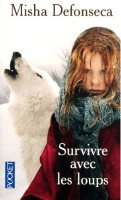 The big news in the world of hoaxes, revealed last week (and already posted in the forum), was the revelation that Misha Defonseca's best-selling, non-fiction memoir of growing up in war-torn Europe turns out to be fiction. (Thanks to everyone who forwarded me links to the news.)
Defonseca's memoir, Misha: A Memoir of the Holocaust Years (also titled Surviving with Wolves), describes how when she was a young child her Jewish parents were seized by the Nazis, forcing her to wander Europe alone until she was adopted by a pack of wolves in the Warsaw ghetto.
The reality is that she wasn't actually adopted by wolves. Nor did she wander Europe. She was raised by her grandparents. Nor is she Jewish.
Defonseca offered the well-worn excuse of literary hoaxers: she considers the tale to be true in a metaphorical sense. She says, "This story is mine. It is not actually reality, but my reality, my way of surviving." This excuse is used so often that bookstores might soon have to start separating books into a third category: fiction, non-fiction, and non-fiction in a metaphorical sense.
Defonseca's hoax was exposed by Sharon Sergeant, a genealogical researcher, who became suspicious and did some research into Defonseca's past.
This is not the first hoax holocaust memoir. In fact, the holocaust is quite a popular subject for literary hoaxers. Jerzy Kosinski claimed his 1965 work The Painted Bird was a non-fiction memoir of his childhood experiences during the Holocaust. It's now considered to be fiction.
And in 1993 Helen Demidenko won the Vogel Literary Award for her book The Hand That Signed the Paper, which described, so she said, her family's experiences in the Ukraine during the Holocaust. Later she admitted that her family never lived in the Ukraine. They were from Britain. And her real name was Darville, not Demidenko.
|
Categories: History, Literature/Language Posted by Alex on Mon Mar 03, 2008 |
Comments (19) |
| More from the Hoax Museum Archives: | |||


I would have the thought the part about living with wolves would have tipped people off when the book was published, but what would I know....i was raised by bears
Posted by Mowgli on Mon Mar 03, 2008 at 09:49 AM
Wolves? How boring. I was raised by an alligator. I remember how my mom (the alligator) used to lovingly carry me around in her mouth. 😊
Posted by Sakano on Mon Mar 03, 2008 at 10:00 AM
And I was raised by wolves who had been raised by alligators who had been raised by turtles. (It's turtles all the way down.)
Posted by Ann on Mon Mar 03, 2008 at 01:31 PM
To change the tone of the thread, the book has to be real. It wasn't selected by Oprah's Book CLub.
Posted by Christopher Cole on Mon Mar 03, 2008 at 02:32 PM
Getting serious here, some psychologists theorise that some people who perform hoaxes like this aren't doing it for the money, but because they want attention and status. I myself have a certian reaction when someone tells me that their ancestors survived the holocaust: "You do know that automatically makes you cool in my eyes?"
Being a holocaust survivor or descened from one means that you're part of history, of what shaped our world. Hell, I'd give my teeth just not look up my family tree and leared that my ancestors came on the First Fleet! (That's the Aussie equivilant of the Mayflower for all you Yankies)
Posted by mangainabottle on Mon Mar 03, 2008 at 08:20 PM
Being a holocaust survivor or descened from one means that you're part of history, of what shaped our world. Hell, I'd give my teeth just not look up my family tree and leared that my ancestors came on the First Fleet! (That's the Aussie equivilant of the Mayflower for all you Yankies)
It's crap like this that makes the (real) history of WW2 difficult to teach.
Posted by Thorfin J Jungerson on Wed Mar 05, 2008 at 05:16 PM
This is the first I've heard of there being a pack of (real, not metaphorical) wolves in the Warsaw Ghetto during World War II. Since the Ghetto was very crowded and the people were starving, a wolf's life expectancy couldn't have been long there, even though wolf meat is not strictly kosher.
But since I was raised by iguanas, there may be some cultural subtleties I'm missing here.
Posted by Big Gary on Wed Mar 05, 2008 at 05:33 PM
But since I was raised by iguanas, there may be some cultural subtleties I'm missing here.
holocaust brainwashing for beginners,
part I: Survivors
The Defonseca case is full of interesting insights.
Before her silly story was debunked, our gullible independent media generally called her a 'holocaust survivor', well aware that this term is a teardrop starter.
Now suppose her story were true: her parents have been arrested for being illegal combattants in a country that had surrendered, not for being Jewish (which they weren't anyway).
She and her wolves had apparently never been harmed by the Germans.
If I understand 'holocaust' beatification rules correctly (which I'm not sure of),
a 'survivor' is one who escaped the Germans trying to kill him for racial reasons,
not for him (or his parents) being - legal or illegal - combattants in a war.
Otherwise all US troops returning from the war theater and the widows of those killed would be 'holocaust survivors'.
That much for our critical free press...
Posted by sylvie on Mon Mar 17, 2008 at 09:55 AM
part I: Survivors
The Defonseca case is full of interesting insights.
Before her silly story was debunked, our gullible independent media generally called her a 'holocaust survivor', well aware that this term is a teardrop starter.
Now suppose her story were true: her parents have been arrested for being illegal combattants in a country that had surrendered, not for being Jewish (which they weren't anyway).
She and her wolves had apparently never been harmed by the Germans.
If I understand 'holocaust' beatification rules correctly (which I'm not sure of),
a 'survivor' is one who escaped the Germans trying to kill him for racial reasons,
not for him (or his parents) being - legal or illegal - combattants in a war.
Otherwise all US troops returning from the war theater and the widows of those killed would be 'holocaust survivors'.
That much for our critical free press...
geeeze! how could the publisher not notice that the piece about the wolves is pure fantasy? I'm originally from Warsaw and everyone knows that there are no wolves here, just white, polar bears!
Posted by matthew on Fri Jun 20, 2008 at 05:28 AM
Alex
There is a new book to look into to see if it is faux hoax or not. ANGEL GIRL was reviewed by AP reporter today in Miami. Said to be memoir of two people who now live in Florida. Prob true, why would they lie? Then again, some people on the Net are beginnging to question this book's truthfulness. Can you post on this and let others chime in?
Allen
What if it turns out that this book is sort of fictiony, sort of made
up, but still a good story? This kind of faux book has been done
before, some women in Boston wrote a book about living wolves during
the Holocaust and France even made a movie of it, but it turns out the
book was a fiction, not a true story as she said it was. Has anyone,
like a reporter for the NYTimes or LA Times, checked into the true
veracity of this lovely inspiring "story". I hope I am wrong, but has
anything checked. If there is a smoking gun here it will be
embarassing.
a friend told me: "Based on my research and that of others, there is
no reason to question the fact that Herman was held in Nazi camps and
that Roma was posing as a Christian in a village. I don't doubt at all
that an apple was passed once or more, or that they met by chance
years later. But they may have exaggerated the fact that they managed
to toss an apple every single day for months. I think there is no way
to verify it was true, but maybe I am making too much of my
skepticism. So I hope you're wrong and that no one sees any reason to
doubt them. "
AND the AP reporter even asks this: "It all seems too remarkable to be
believed. Rosenblat insists it is all true." WHY THE WORD INSISTS
HERE?
The AP news said this too: Michael Berenbaum, a distinguished
Holocaust scholar who has authored a dozen books, has read
Rosenblatt's memoir and sees no reason to question it. [BUT JUST
TALKING ABOUT QUESTIONING IT MEANS SOME PEOPLE ARE QUESTIONING IT....]
"I wasn't born then so I can't say I was an eyewitness. But it's
credible," Berenbaum said. "Crazier things have happened."
So...
What if this "story", the backstory, turns out to be a fib? Remember
those other Holocaust stories that later turned out to be pure
fiction? And also got made into movies? Some reporter should check
into this to see if indeed the Rosenblats, who seem like a lovely
living couple, have indeed told the entire ''truth'' about how they
met. I suspect they did tell the truth. I hope it's a true story.
But. Some reporter should check.
Posted by Allen Bean on Mon Oct 13, 2008 at 10:34 PM
There is a new book to look into to see if it is faux hoax or not. ANGEL GIRL was reviewed by AP reporter today in Miami. Said to be memoir of two people who now live in Florida. Prob true, why would they lie? Then again, some people on the Net are beginnging to question this book's truthfulness. Can you post on this and let others chime in?
Allen
What if it turns out that this book is sort of fictiony, sort of made
up, but still a good story? This kind of faux book has been done
before, some women in Boston wrote a book about living wolves during
the Holocaust and France even made a movie of it, but it turns out the
book was a fiction, not a true story as she said it was. Has anyone,
like a reporter for the NYTimes or LA Times, checked into the true
veracity of this lovely inspiring "story". I hope I am wrong, but has
anything checked. If there is a smoking gun here it will be
embarassing.
a friend told me: "Based on my research and that of others, there is
no reason to question the fact that Herman was held in Nazi camps and
that Roma was posing as a Christian in a village. I don't doubt at all
that an apple was passed once or more, or that they met by chance
years later. But they may have exaggerated the fact that they managed
to toss an apple every single day for months. I think there is no way
to verify it was true, but maybe I am making too much of my
skepticism. So I hope you're wrong and that no one sees any reason to
doubt them. "
AND the AP reporter even asks this: "It all seems too remarkable to be
believed. Rosenblat insists it is all true." WHY THE WORD INSISTS
HERE?
The AP news said this too: Michael Berenbaum, a distinguished
Holocaust scholar who has authored a dozen books, has read
Rosenblatt's memoir and sees no reason to question it. [BUT JUST
TALKING ABOUT QUESTIONING IT MEANS SOME PEOPLE ARE QUESTIONING IT....]
"I wasn't born then so I can't say I was an eyewitness. But it's
credible," Berenbaum said. "Crazier things have happened."
So...
What if this "story", the backstory, turns out to be a fib? Remember
those other Holocaust stories that later turned out to be pure
fiction? And also got made into movies? Some reporter should check
into this to see if indeed the Rosenblats, who seem like a lovely
living couple, have indeed told the entire ''truth'' about how they
met. I suspect they did tell the truth. I hope it's a true story.
But. Some reporter should check.
the book ANGEL AT THE FENCE has now been shown to be a hoax....can you do blog post on this AP news? GOOGLE it
Posted by allen bean on Sun Dec 28, 2008 at 07:11 AM
Posted by allen bean on Sun Dec 28, 2008 at 07:13 AM
I don't know what to believe anymore, but this is very bad and very sad. This isn't the first time and it won't be the last, I'm certain.
The accepted view right now is that 6 million didn't die, but around 4.0 million. But even this number may be corrected in the future as we get more facts and gain more knowledge. Like this piece about one of the Bielski brothers, who say they rescued a lot of jews in WW2: "the sole surviving Bielski brother is being called a con-man after swindling a 93-year-old woman, a Catholic survivor of the Holocaust." Well, enough of this.
Posted by Mikey on Sun Dec 28, 2008 at 04:58 PM
The accepted view right now is that 6 million didn't die, but around 4.0 million. But even this number may be corrected in the future as we get more facts and gain more knowledge. Like this piece about one of the Bielski brothers, who say they rescued a lot of jews in WW2: "the sole surviving Bielski brother is being called a con-man after swindling a 93-year-old woman, a Catholic survivor of the Holocaust." Well, enough of this.
Mikay
Let's not get carried away. The Holocaust happened. So it wasn't 5,999.999 Jewish people who died in the Hcaust, maybe it was 3,888,888 people, does make it a hoax? Even if the final figures are 999,999 Jews died in Holocaust, the main thing, Mikay, is Hitler had a final solution to kill the Jews of Germany and Poland and elsewhere all because they were of Jewish DNA genepools and didn't not follow Christ, who Hitler followed. SO what is your point?
Do post your POV
Posted by Allen Bean on Sun Dec 28, 2008 at 10:47 PM
Let's not get carried away. The Holocaust happened. So it wasn't 5,999.999 Jewish people who died in the Hcaust, maybe it was 3,888,888 people, does make it a hoax? Even if the final figures are 999,999 Jews died in Holocaust, the main thing, Mikay, is Hitler had a final solution to kill the Jews of Germany and Poland and elsewhere all because they were of Jewish DNA genepools and didn't not follow Christ, who Hitler followed. SO what is your point?
Do post your POV
"Let's not get carried away. The Holocaust happened."
Ah, yes?
<font color=red>The rest edited for off-topicness</font color>
Posted by sylvie on Tue Dec 30, 2008 at 01:21 PM
Ah, yes?
<font color=red>The rest edited for off-topicness</font color>
<font color=red>This is not a thread for Holocaust Denial. If you wish to discuss the actual topic of the post then feel free to do so, but Holocaust Denial is off-topic and will not be tolerated here. Any further off-topic posts will be deleted. This applies to all sides of the argument.
</font color>Thank you,
Charybdis - Moderator
Posted by Charybdis on Tue Dec 30, 2008 at 03:33 PM
</font color>Thank you,
Charybdis - Moderator
Any further off-topic posts will be deleted. This applies to all sides of the argument.
Apparently this does not apply to both sides. The previous comment (by Allen Bean) says "the Holocaust happened", which according to you is not the subject of this thread, which is a valid point.
However, by admitting believers to express their views, but deleting the response of 'deniers' you apply two different measures which obviously falsify the discussion.
Posted by sylvie on Sat Jan 03, 2009 at 02:26 PM
Apparently this does not apply to both sides. The previous comment (by Allen Bean) says "the Holocaust happened", which according to you is not the subject of this thread, which is a valid point.
However, by admitting believers to express their views, but deleting the response of 'deniers' you apply two different measures which obviously falsify the discussion.
Look Sylvie.....while we respect your right to say whatever you want to say, some things are absurd. I mean it is like saying the Civil War never happened, or the Vietnam War never happened, or the US never really sent men to land on the moon. You might not agree with all of the facts about the Holocaust, and that's okay, historains are still studying what happened there, back then, but for reasons of ideology or antisemitism to say the Holocaust never happened, that's not rational or logical. That's waht the mods are saying, I think. Do you know that David Irving the famous UK Hcaust denier is now claimign that HE caused the Herman Rosenblat memori to the cancelled. HIM! He had nothing to do with it, and yet is says he did it, on his blog. That is plain silly and funny.
Posted by Allen Bean on Mon Jan 05, 2009 at 07:49 AM
while we respect your right to say whatever you want to say
Are you a cynic or are you kidding?
My arguments in this thread are not respected but brutally censored, see above. Probably this one will be distorted too.
They hypocritically say: "this 'denier's' comment is off-topic", but they continue to publish all the 'off-topic' comments of the 'Holocaust'-believers.
That's how the hoax is kept going since 1945.
some things are absurd
Exactly!
Like the memoirs of the Wiesels, Vrbas, Wilkomirskis, Marcos, Defonsecas, Rosenblats and many others.
Like the 'confessions' of the Gersteins, Hoess's and so on.
Like the officially admitted (!) fake 'gas chambers' at Auschwitz, Dachau, Buchenwald and elsewhere.
Like never found mass graves, never executed forensic investigations.
Like the number of victims lowered by millions, numbers of so-called 'survivers' increasing ...
mean it is like saying [...] the Vietnam War never happened, or the US never really sent men to land on the moon.
Your analogies are badly chosen. Since you like the Vietnam War:
Saying 'The Holocaust' never happened is like saying the Tonkin incident never happened: it's a question of definition.
Something was going on in both cases, but probably not what they sell us.
The truth has been distorted for political reasons and the revisonists try to find out how and why.
You don't understand one basic point:
Saying something happened doesn't make sense unless you define clearly what it was.
In the case of a broad event, like 'WWII' this is easily done. But a specific WWII-claim of allied propaganda, such as
a) 6 million Jews killed
b) most of which in gas chambers
c) by a policy of genocide
needs detailed investigation. And no neutral forensic investigation was ever allowed.
Memories (and even tortured confessions) are no proofs, juridically speaking.
That is why the Jews would like 'The Holocaust' to be 'beyond proof', and any questioning is punished with a 5 years prison term (in Europe).
Do you know that David Irving ...
Please respond to my arguments, I am not responsible for David Irving.
Posted by sylvie on Wed Jan 07, 2009 at 01:55 PM
Are you a cynic or are you kidding?
My arguments in this thread are not respected but brutally censored, see above. Probably this one will be distorted too.
They hypocritically say: "this 'denier's' comment is off-topic", but they continue to publish all the 'off-topic' comments of the 'Holocaust'-believers.
That's how the hoax is kept going since 1945.
some things are absurd
Exactly!
Like the memoirs of the Wiesels, Vrbas, Wilkomirskis, Marcos, Defonsecas, Rosenblats and many others.
Like the 'confessions' of the Gersteins, Hoess's and so on.
Like the officially admitted (!) fake 'gas chambers' at Auschwitz, Dachau, Buchenwald and elsewhere.
Like never found mass graves, never executed forensic investigations.
Like the number of victims lowered by millions, numbers of so-called 'survivers' increasing ...
mean it is like saying [...] the Vietnam War never happened, or the US never really sent men to land on the moon.
Your analogies are badly chosen. Since you like the Vietnam War:
Saying 'The Holocaust' never happened is like saying the Tonkin incident never happened: it's a question of definition.
Something was going on in both cases, but probably not what they sell us.
The truth has been distorted for political reasons and the revisonists try to find out how and why.
You don't understand one basic point:
Saying something happened doesn't make sense unless you define clearly what it was.
In the case of a broad event, like 'WWII' this is easily done. But a specific WWII-claim of allied propaganda, such as
a) 6 million Jews killed
b) most of which in gas chambers
c) by a policy of genocide
needs detailed investigation. And no neutral forensic investigation was ever allowed.
Memories (and even tortured confessions) are no proofs, juridically speaking.
That is why the Jews would like 'The Holocaust' to be 'beyond proof', and any questioning is punished with a 5 years prison term (in Europe).
Do you know that David Irving ...
Please respond to my arguments, I am not responsible for David Irving.
{stupid336x280}
Get MOH Blog Posts by Email
Our Sister Sites

