
Get MOH Blog Posts by Email
![]() | |
| |
| |
| |
| |
| |
| |
| |
|
Site Map
Blog Categories
Advertising |
Animals |
April Fools Day |
Art |
Bad Excuses |
Birth/Babies |
Body Manipulation |
Books |
Business/Finance |
Celebrations |
Celebrities |
Con Artists |
Conspiracy Theories |
Crop Circles |
Cryptozoology |
Nessie |
Death |
eBay |
Education |
Email Hoaxes |
Entertainment |
Exploration/Travel |
Extraterrestrial Life |
Fashion |
Folklore/Tall Tales |
Food |
Free Energy |
Future/Time |
Gnomes |
Gross |
Hate Crimes/Terror |
Health/Medicine |
History |
Identity/Imposters |
Journalism |
Law/Police/Crime |
Literature/Language |
Magic |
Mass Delusion |
Military |
Miscellaneous |
Music |
Paranormal |
Pareidolia |
Photos/Videos |
Places |
Politics |
Pranks |
Products |
Pseudoscience |
Psychology |
Radio |
Religion |
Scams |
Science |
Sex/Romance |
Social Networking Sites |
Sports |
Technology |
Urban Legends |
Videos |
Websites
Blog Archives
May, 2013 |
April, 2013 |
March, 2013 |
February, 2013 |
January, 2013 |
October, 2012 |
September, 2012 |
August, 2012 |
July, 2012 |
June, 2012 |
May, 2012 |
April, 2012 |
March, 2012 |
February, 2012 |
January, 2012 |
December, 2011 |
November, 2011 |
October, 2011 |
September, 2011 |
August, 2011 |
November, 2010 |
April, 2010 |
January, 2010 |
December, 2009 |
November, 2009 |
October, 2009 |
September, 2009 |
August, 2009 |
July, 2009 |
June, 2009 |
May, 2009 |
April, 2009 |
March, 2009 |
February, 2009 |
January, 2009 |
December, 2008 |
November, 2008 |
October, 2008 |
September, 2008 |
August, 2008 |
July, 2008 |
June, 2008 |
May, 2008 |
April, 2008 |
March, 2008 |
February, 2008 |
January, 2008 |
December, 2007 |
November, 2007 |
October, 2007 |
September, 2007 |
August, 2007 |
July, 2007 |
June, 2007 |
May, 2007 |
April, 2007 |
March, 2007 |
February, 2007 |
January, 2007 |
December, 2006 |
November, 2006 |
October, 2006 |
September, 2006 |
August, 2006 |
July, 2006 |
June, 2006 |
May, 2006 |
April, 2006 |
March, 2006 |
February, 2006 |
January, 2006 |
December, 2005 |
November, 2005 |
October, 2005 |
September, 2005 |
August, 2005 |
July, 2005 |
June, 2005 |
May, 2005 |
April, 2005 |
March, 2005 |
February, 2005 |
January, 2005 |
December, 2004 |
November, 2004 |
October, 2004 |
September, 2004 |
August, 2004 |
July, 2004 |
June, 2004 |
May, 2004 |
April, 2004 |
March, 2004 |
February, 2004 |
January, 2004 |
December, 2003 |
November, 2003 |
October, 2003 |
September, 2003 |
August, 2003 |
July, 2003 |
June, 2003 |
May, 2003 |
January, 2003 |
November, 2002 |
October, 2002 |
September, 2002 |
August, 2002 |
July, 2002 |
Octopus Camouflages Itself
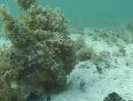
Luc emailed me a link to this clip of an octopus camouflaging itself, wondering if the footage is real. The camera approaches what looks like an underwater bush, and then out of nowhere this octopus appears, squirts ink, and races away across the ocean floor. I actually remember this clip doing the rounds a year or two ago, and although the octopus's camouflage seems to be some kind of Hollywood special effect, I believe that it's real. According to a version of the clip that can be found on efootage.com, the footage was taken by biologist Roger Hammer (I think I'm hearing that last name correctly, but the sound on the efootage clip is awful). I have no idea who Roger Hammer is, but it might be the same Roger Hammer who works at the Miami-Dade Parks Department and is a specialist on Florida plants (author of Everglades Wildflowers). I'm trying to find a picture of the Miami-Dade Roger Hammer to compare him with the guy in the news clip.

|
Categories: Animals, Photos/Videos Posted by Alex on Wed Apr 13, 2005 |
Comments (32) |
| More from the Hoax Museum Archives: | |||
Isn't that supposed to be a mimic octopus? I saw a documentary on them once. It was pretty interesting. I'd say the footage is real. But, then, I'm not a marine biologist...
Posted by Ga on Wed Apr 13, 2005 at 10:28 AM
on the topic of octopus fun cbc posted this recently to accompany a radio interview:
http://www.cbc.ca/asithappens/STEAM/2005/walking_octopus_video_20050325.html
Posted by corky on Wed Apr 13, 2005 at 10:36 AM
http://www.cbc.ca/asithappens/STEAM/2005/walking_octopus_video_20050325.html
sorry that clip had no context. the subject can be found at
http://ist-socrates.berkeley.edu/~chuffard/
Posted by corky on Wed Apr 13, 2005 at 10:38 AM
http://ist-socrates.berkeley.edu/~chuffard/
Watching video of cuttlefish cycling through their colors is probably the most fascinating "animal" video I've ever seen.
[url="http://www.ncsu.edu/biomovies/shortclips/Inverts.html"]http://www.ncsu.edu/biomovies/shortclip
s/Inverts.html[/url]
Watch the cuttlefish video here. It's not the pulsing, hypnotic one that I really like but it's cool nonetheless.
Posted by Charybdis in Hell on Wed Apr 13, 2005 at 10:40 AM
[url="http://www.ncsu.edu/biomovies/shortclips/Inverts.html"]http://www.ncsu.edu/biomovies/shortclip
s/Inverts.html[/url]
Watch the cuttlefish video here. It's not the pulsing, hypnotic one that I really like but it's cool nonetheless.
It is real; I see them on animal planet all the time. They do some strange things like even mimic other creatures when they camouflage themselves.
Posted by X in McKinney, TX on Wed Apr 13, 2005 at 11:07 AM
Yeah- this is completely real. It's Octopus cyanea (day or reef octopus in Hawaii/tropical pacific) and the video was shot by Roger Hanlon at Woods Hole.
Posted by ch on Wed Apr 13, 2005 at 12:39 PM
I have seen pictures of an octopus changing color - I have seen pictures of an octopus changing color - even to complex patterns (as in the clip). However, it not only changed it's color, it also changed it's silhouette to produce some knobbly protrusions. On the slow motion rewind, they appear right before the end of the tape. That I have not seen before. But, I can't easily see how or why anyone would fake it.
Posted by Jon Smith in NJ on Wed Apr 13, 2005 at 01:27 PM
that clip came from the pbs show "origins" it was on last night
Posted by arg on Wed Apr 13, 2005 at 01:41 PM
As a long time diver I can tell you their camaflouge is amazing,they can seemingly melt away into their suroundings.
I've seen divers swim right past them when they've pearched on a rock or a sandy area.
Beautiful creatures.
Posted by padego on Wed Apr 13, 2005 at 01:44 PM
I've seen divers swim right past them when they've pearched on a rock or a sandy area.
Beautiful creatures.
Yes, this is absolutely genuine. It is part of a scientific paper published recently in the journal Science - the reference is:-
Science, Vol 307, Issue 5717, page 1927, 25 March 2005
The Abstract of this paper is as follows:-
Underwater Bipedal Locomotion by Octopuses in Disguise
Christine L. Huffard, Farnis Boneka,2 Robert J. Full
Here we report bipedal movement with a hydrostatic skeleton. Two species of octopus walk on two alternating arms using a rolling gait and appear to use the remaining six arms for camouflage. Octopus marginatus resembles a coconut, and Octopus (Abdopus) aculeatus, a clump of floating algae. Using underwater video, we analyzed the kinematics of their strides. Each arm was on the sand for more than half of the stride, qualifying this behavior as a form of walking.
Department of Integrative Biology, University of California, Berkeley, CA 94720
Posted by Doctorpsi in University of Bristol on Wed Apr 13, 2005 at 01:50 PM
Science, Vol 307, Issue 5717, page 1927, 25 March 2005
The Abstract of this paper is as follows:-
Underwater Bipedal Locomotion by Octopuses in Disguise
Christine L. Huffard, Farnis Boneka,2 Robert J. Full
Here we report bipedal movement with a hydrostatic skeleton. Two species of octopus walk on two alternating arms using a rolling gait and appear to use the remaining six arms for camouflage. Octopus marginatus resembles a coconut, and Octopus (Abdopus) aculeatus, a clump of floating algae. Using underwater video, we analyzed the kinematics of their strides. Each arm was on the sand for more than half of the stride, qualifying this behavior as a form of walking.
Department of Integrative Biology, University of California, Berkeley, CA 94720
NEIL deGRASSE TYSON: In the lab, Hanlon and his team study how cephalopods, like this cuttlefish, control and change their skin patterns.
ROGER HANLON: It's taking that visual information and translating it to the skin on the back.
This is beautiful. Look at that perfect white square.
NEIL deGRASSE TYSON: To see how they apply their tricks in their natural habitat, Hanlon tails them with his underwater camera. His biggest challenge? Finding them in the first place. Octopus and cuttlefish have an uncanny ability to completely disappear into the background.
ROGER HANLON: We all think of the chameleon as sort of the king or queen of color change, but that's not true. A cephalopod can show many more patterns and can show them instantaneously. An octopus can be so camouflaged you literally cannot see it. So every place they go, they are morphing into something that looks a lot like that environment.
So here's the scene. You've got a rock with algae all over it. There appears to be nothing there except the swimming fish going by. Okay, so take a look here and just watch for a moment.
There it is. Whoa! Isn't that amazing? This animal was completely camouflaged on that rock, and suddenly it was there.
This remarkable camouflage, changing both pattern and three-dimensional texture, is performed by skin unlike any other animal's. It's an amazing skin, because there are up to 20 million of these chromatofore pigment cells, and to control 20 million of anything is going to take a lot of processing power. We call it a computer. Animals have brains. These animals have extraordinarily large, complicated brains to make all this work.
NEIL deGRASSE TYSON: For Hanlon, the brains and sophisticated behavior of these animals suggest that there's more than just one way to get smart.
Posted by arg on Wed Apr 13, 2005 at 01:54 PM
ROGER HANLON: It's taking that visual information and translating it to the skin on the back.
This is beautiful. Look at that perfect white square.
NEIL deGRASSE TYSON: To see how they apply their tricks in their natural habitat, Hanlon tails them with his underwater camera. His biggest challenge? Finding them in the first place. Octopus and cuttlefish have an uncanny ability to completely disappear into the background.
ROGER HANLON: We all think of the chameleon as sort of the king or queen of color change, but that's not true. A cephalopod can show many more patterns and can show them instantaneously. An octopus can be so camouflaged you literally cannot see it. So every place they go, they are morphing into something that looks a lot like that environment.
So here's the scene. You've got a rock with algae all over it. There appears to be nothing there except the swimming fish going by. Okay, so take a look here and just watch for a moment.
There it is. Whoa! Isn't that amazing? This animal was completely camouflaged on that rock, and suddenly it was there.
This remarkable camouflage, changing both pattern and three-dimensional texture, is performed by skin unlike any other animal's. It's an amazing skin, because there are up to 20 million of these chromatofore pigment cells, and to control 20 million of anything is going to take a lot of processing power. We call it a computer. Animals have brains. These animals have extraordinarily large, complicated brains to make all this work.
NEIL deGRASSE TYSON: For Hanlon, the brains and sophisticated behavior of these animals suggest that there's more than just one way to get smart.
Oh yes, the mimic octopus. Most creatures that mimic and do so as an "act of will" ( Rather than being born looking a lot like something else ), can impersonate one other organism. The mimic octopus is capable of changing shape and colour to become any of 10 other species - For example, change colour to black and yellow stripes, thin out ones arms and body and one becomes a sea snake. Or contract arms to look fatter, cahnge to bright red, divert fluids in tissues to make spikes and bumps appear and suddenly it's a starfish.
Not only does this show what not having bones or enclosed circulation combined with chromatic pigments does for one, the real kicker is that it argues for a conciousness that rivals ours and otranks many other animals. Consider; Octopus sees other organism. Octopus then works out the bodily manipulations needed to look like that and the colours required. To do this, it must be 'aware' of itself in a way that many otehr animals are not - A level of proprioreception that is near equal to human actors pretending to be trees.
And they can take the lids off of any containers. If they ever solve the reproduction and growth problems, you humans are screwed royally.

Posted by DFStuckey in Auckland New Zealand on Thu Apr 14, 2005 at 01:52 AM
Not only does this show what not having bones or enclosed circulation combined with chromatic pigments does for one, the real kicker is that it argues for a conciousness that rivals ours and otranks many other animals. Consider; Octopus sees other organism. Octopus then works out the bodily manipulations needed to look like that and the colours required. To do this, it must be 'aware' of itself in a way that many otehr animals are not - A level of proprioreception that is near equal to human actors pretending to be trees.
And they can take the lids off of any containers. If they ever solve the reproduction and growth problems, you humans are screwed royally.
I dont think its this clear-cut. I may not be an expert on the subject but I am a little skeptical of this. I have observed color change and texture change but I cannot believe that it could happen in the matter portrayed in this video. This is not just a color change this is a true change. There are several things we must observe, expecifically in the slowdown/reverse.
1- The blue border of the octopus litterly shrinks, or rather appears to. This could be caused by the camouflague but it really is hard to tell.
2- I was aware the octopus could change the appearance of its skin, but its eye as well? Notice how his eye conforms to the same texture and infact loses the pupil altogether. Maybe there is some patch of skin over the eye that allows this but Im not sure, maybe someone can clear it up.
3- Notice how it begins to take on a brown color with white spots, yet it then very quickly (Over the time of 20-30 frames) begins to take the form of the reef.
Now given these points lets also look at why it does seem to appear real. Well for starters the figure around the octopus does NOT appear to sway as expected like the rest of the reef. Yet this could occur with a mildly camoed octopi that could have been digitally touched up. Keeping with the theme it really does appear that an octopus is there, yet I believe it was digitally touched up.
It appears very fishy(no pun intended) yet it could in all likely be real. But I cannot get over that frame sudden change when played backwards, it should get more camoed not change forms before our eyes. Maybe it really does occur and its just an illusion played on our eyes, either way that is one fascinating piece of video.
If anyone could expand on these thoughts or even better prove me wrong/right then by all means do it.
"The believer is happy; the doubter is wise."
Posted by Genesis on Fri Apr 15, 2005 at 12:17 PM
1- The blue border of the octopus litterly shrinks, or rather appears to. This could be caused by the camouflague but it really is hard to tell.
2- I was aware the octopus could change the appearance of its skin, but its eye as well? Notice how his eye conforms to the same texture and infact loses the pupil altogether. Maybe there is some patch of skin over the eye that allows this but Im not sure, maybe someone can clear it up.
3- Notice how it begins to take on a brown color with white spots, yet it then very quickly (Over the time of 20-30 frames) begins to take the form of the reef.
Now given these points lets also look at why it does seem to appear real. Well for starters the figure around the octopus does NOT appear to sway as expected like the rest of the reef. Yet this could occur with a mildly camoed octopi that could have been digitally touched up. Keeping with the theme it really does appear that an octopus is there, yet I believe it was digitally touched up.
It appears very fishy(no pun intended) yet it could in all likely be real. But I cannot get over that frame sudden change when played backwards, it should get more camoed not change forms before our eyes. Maybe it really does occur and its just an illusion played on our eyes, either way that is one fascinating piece of video.
If anyone could expand on these thoughts or even better prove me wrong/right then by all means do it.
"The believer is happy; the doubter is wise."
Cephalopods have closed circulation, actually.
Octopuses are widely considered the smartest invertebrates. One big handicap they face: their lifespan is much shorter than that of large mammals, often one year, the longest only six years. Also they don't survive reproduction, which makes passing skills to offspring difficult.
Posted by Carl Fink on Fri Apr 15, 2005 at 10:38 PM
Octopuses are widely considered the smartest invertebrates. One big handicap they face: their lifespan is much shorter than that of large mammals, often one year, the longest only six years. Also they don't survive reproduction, which makes passing skills to offspring difficult.
I say it's real. Octopodes have terrifying abilities to change color, texture, shape. (Like everyone else said, only more intelligently
)
Posted by Criq on Sat Apr 16, 2005 at 02:49 AM
It's absolutely true and undoctored. I've seen this behavior many times in the wild, and similar behaviors in other species.
Cephalopods have thousands of tiny sacs of pigment in their skin that can expand and contract to change general color. The color they can take on is limited by the types of pigments in these "chromatophores." They can also change their skin texture with little muscles in the skin that raise and lower flaps of skin (papillae). Both color and texture can change instantly to produce camouflage, or display.
Octopus cyanea (in this clip) has exceptional and very real camouflage capabilities, shown in the beginning of the clip. As it is startled by the diver (either Roger Hanlon, John Forsythe, or one of their team members) it changes from camouflage to a defense display, much like a bluff, then inks and escapes.
Posted by crissy in berkeley on Sat Apr 16, 2005 at 11:02 AM
Cephalopods have thousands of tiny sacs of pigment in their skin that can expand and contract to change general color. The color they can take on is limited by the types of pigments in these "chromatophores." They can also change their skin texture with little muscles in the skin that raise and lower flaps of skin (papillae). Both color and texture can change instantly to produce camouflage, or display.
Octopus cyanea (in this clip) has exceptional and very real camouflage capabilities, shown in the beginning of the clip. As it is startled by the diver (either Roger Hanlon, John Forsythe, or one of their team members) it changes from camouflage to a defense display, much like a bluff, then inks and escapes.
I don't know. I'm sure that there are creatures that can completely camoflage themselves, but this particular video seems to me to be doctored. The moment where it changes seems to be a photographic merging. Doesn't anyone else see this? It's just too drastic of a change and too quick. It's like the octopus suddenly completely disappears. I don't doubt that they can meld into their surroundings, I just don't buy that this is a genuine video of that. It just looks to me like a cross fader type of photographic trick.
Posted by Glamcat on Sat Apr 16, 2005 at 10:16 PM
Also, if the clip wasn't faked, consider this... How did the camera person happen to know that the octopus was there?? huh??
Posted by Glamcat on Sat Apr 16, 2005 at 10:20 PM
I do not know your answer. I have asked the Llamas but they are drunk, and want very much to see me do the dance of my cousin Guillermo, and that I will not do, for it is they, not I, who is drunk. I will only do the Ramonian CantCant Dance on holidays, after walking my dog with the shaven roompa. Rrrrroompa
Posted by Raoul on Sat Apr 16, 2005 at 10:35 PM
they knew where the octopus was because they'd been following and filming it all day. This is just one of their many clips of video of that animal. Go to:
http://www.cephbase.utmb.edu/viddb/vidsrch3.cfm?ID=132&CephID=495
to see this clip- it's octopus vulgaris.
Posted by fang in berkeley on Sat Apr 16, 2005 at 11:10 PM
http://www.cephbase.utmb.edu/viddb/vidsrch3.cfm?ID=132&CephID=495
to see this clip- it's octopus vulgaris.
I think it looks very much like an opacity change common to all visual effects softwares. Especially when the eye just fades away, instead of changing. I wouldn't bet on it, but I do work with this sort of thing, and that's what it looks like.
Posted by Lgab on Sun Apr 17, 2005 at 09:01 AM
it's real. get over it.
Posted by frank wright on Wed May 11, 2005 at 04:19 PM
I have seen an octopus change its colour while snorkeling in the Red sea. The change comes instantly. Funny enough, when you got close to it or "annoyed" it in any way, the octopus changed into a bright-red "warning" colour while trying to get away (I was a kid back then, so I was actually trying to make it squirt ink). Besides, texture can be "faked" by creating areas in different shades of a particular colour, thereby simulating depth.
Posted by Lore in Swe on Wed Sep 07, 2005 at 04:44 PM
Good point about the shading, and it leads to the same point I make: These octpoi are smart enough to be able to determine not only the shape of other objects but how to make their own body shape resemble them - Not bad for something with no spine.
Posted by DFSTuckey in Auckland New Zealand on Thu Sep 08, 2005 at 05:55 AM
Just thought that I should add that since the last post I saw a wildlife program on the telly featuring this particular video. Apparently the octopi _can_ change its texture by the help of tiny muscular groups dotted over its skin. They also seem to be rather intelligent, since they showed an octopus unscrewing jars, navigating labyrinths and remembering to asociate a certain shape (a cross on a hatch with a shrimp hidden behind it) with food.
Posted by Lore in Sweden on Tue Oct 04, 2005 at 11:52 AM
Hey my name is Surina Kaur.I am the age of ten years old.
Posted by Surina in Elk Grove,CA on Tue Dec 06, 2005 at 10:12 AM
These are definitely the coolest creatures. I knew they were capable of changing colour, but the most amazing thing is when i actually saw one when diving in Hawaii, they are actually able to change the SHAPE of their skin, from smooth to bumpy and spikey. Very very cool. In a university biology class my TA was telling me about some research that some scientists were doing crabs, and the crabs kept going missing. They set up cameras to find out who was stealing them. Turns out a lab next door down the hall had octopus tanks, and at night an octopus would open the top of his tank, climb out, open the door, "walk" down the hall into the other lab, fish out the crabs and get baak into his tank. The crazy thing is that he rememebered to close all the doors behind him...wow!
Posted by Hassan AbouZeid in Ottawa on Sat Mar 18, 2006 at 12:33 PM
not likely. With the exception of a few intertidal species octopuses are really bad at crawling on land. Unless the ground were moist, most captive-kept octos wouldn't make it ten feet before they'd get too dry to keep crawling. There they'd sit until they'd suffocate and eventually dry into octo-jerky. Plus, given their huge appetite if they were to find a food source they wouldn't leave it if it meant slithering down the hall. A discovery channel show staged this scene once but the tanks were side-by side and the octopus only had to be out of water for a few seconds. I've heard a gazillion versions of this story and it always involves a video camera. Yet no one ever seems to have that tape (and how would the tape last all night?). My conclusion- urban legend.
Posted by jessica on Sun Mar 19, 2006 at 09:53 PM
There is a LOT of conjecture about this video on the net. And also some correct and incorrect information. Yes, THIS IS A REAL VIDEO. No, it is not Roger Hammer, but ROGER HANLON that filmed it. Yes, octopuses are very smart, and yes they can change the potrusions on their skin. However, as I learnt in a lecture conducted by one of Roger's colleagues not one week ago, octopuses can actually only see in two colours. That's right, their vision in dichromatic. You might ask how they match the colours surrounding them then? Well, the truth is that they dont really. They merely match the PATTERNS and SHADES very closely. It is just that as a result of evolution, those that happened to show the correct colours (and hence be camouflaged against predators) have survived through natural selection. Dont beleive me? I have seen pictures of octopuses that live in predominantly brown and green environments in the wild be put in tanks with patterned coloured pebbles of blue and yellow. Although they can match the pattern of the contrasting pebbles perfectly, they cannot match the colour at all and stick out like a saw thumb. Amazing creatures none the less.
Posted by Pete the Pirate on Tue Jul 04, 2006 at 08:15 AM
That's a real octopus. The cyanea.
http://www.pbs.org/wnet/nature/octopus/chameleons.html
PBS did a bit on it.
Posted by poly in seattle on Thu Jan 11, 2007 at 02:41 PM
http://www.pbs.org/wnet/nature/octopus/chameleons.html
PBS did a bit on it.


