Get MOH Blog Posts by Email
Recent Forum Posts
| • | Wow! 05/10/2013 |
| • | Authorities are leaning more toward zero tolerance of teenagers 05/06/2013 |
| • | Lady Light 05/06/2013 |
| • | ET's Visit Earth, aid US Government 05/05/2013 |
| • | Happy Birthday, Robin Bobcat! 05/03/2013 |
| • | Very tiny robot uprising 05/02/2013 |
| • | Return of the living not-really-dead! 05/02/2013 |
| • | A Belated Happy Birthday To Accipiter! 05/01/2013 |
| • | World's Smallest Movie 05/01/2013 |
| • | UFOs now available in blue and yellow 05/01/2013 |
![]() | |
| |
| |
| |
| |
| |
| |
| |
|
Site Map
Blog Categories
Advertising |
Animals |
April Fools Day |
Art |
Bad Excuses |
Birth/Babies |
Body Manipulation |
Books |
Business/Finance |
Celebrations |
Celebrities |
Con Artists |
Conspiracy Theories |
Crop Circles |
Cryptozoology |
Nessie |
Death |
eBay |
Education |
Email Hoaxes |
Entertainment |
Exploration/Travel |
Extraterrestrial Life |
Fashion |
Folklore/Tall Tales |
Food |
Free Energy |
Future/Time |
Gnomes |
Gross |
Hate Crimes/Terror |
Health/Medicine |
History |
Identity/Imposters |
Journalism |
Law/Police/Crime |
Literature/Language |
Magic |
Mass Delusion |
Military |
Miscellaneous |
Music |
Paranormal |
Pareidolia |
Photos/Videos |
Places |
Politics |
Pranks |
Products |
Pseudoscience |
Psychology |
Radio |
Religion |
Scams |
Science |
Sex/Romance |
Social Networking Sites |
Sports |
Technology |
Urban Legends |
Videos |
Websites
Blog Archives
May, 2013 |
April, 2013 |
March, 2013 |
February, 2013 |
January, 2013 |
October, 2012 |
September, 2012 |
August, 2012 |
July, 2012 |
June, 2012 |
May, 2012 |
April, 2012 |
March, 2012 |
February, 2012 |
January, 2012 |
December, 2011 |
November, 2011 |
October, 2011 |
September, 2011 |
August, 2011 |
November, 2010 |
April, 2010 |
January, 2010 |
December, 2009 |
November, 2009 |
October, 2009 |
September, 2009 |
August, 2009 |
July, 2009 |
June, 2009 |
May, 2009 |
April, 2009 |
March, 2009 |
February, 2009 |
January, 2009 |
December, 2008 |
November, 2008 |
October, 2008 |
September, 2008 |
August, 2008 |
July, 2008 |
June, 2008 |
May, 2008 |
April, 2008 |
March, 2008 |
February, 2008 |
January, 2008 |
December, 2007 |
November, 2007 |
October, 2007 |
September, 2007 |
August, 2007 |
July, 2007 |
June, 2007 |
May, 2007 |
April, 2007 |
March, 2007 |
February, 2007 |
January, 2007 |
December, 2006 |
November, 2006 |
October, 2006 |
September, 2006 |
August, 2006 |
July, 2006 |
June, 2006 |
May, 2006 |
April, 2006 |
March, 2006 |
February, 2006 |
January, 2006 |
December, 2005 |
November, 2005 |
October, 2005 |
September, 2005 |
August, 2005 |
July, 2005 |
June, 2005 |
May, 2005 |
April, 2005 |
March, 2005 |
February, 2005 |
January, 2005 |
December, 2004 |
November, 2004 |
October, 2004 |
September, 2004 |
August, 2004 |
July, 2004 |
June, 2004 |
May, 2004 |
April, 2004 |
March, 2004 |
February, 2004 |
January, 2004 |
December, 2003 |
November, 2003 |
October, 2003 |
September, 2003 |
August, 2003 |
July, 2003 |
June, 2003 |
May, 2003 |
January, 2003 |
November, 2002 |
October, 2002 |
September, 2002 |
August, 2002 |
July, 2002 |
Weblog Category
Scams
Scams
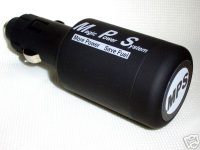
We've seen quite a few dubious devices that claim to enhance the performance and mileage of automobiles. The BioPerformance pills come to mind. However, the Magic Power System (aka MPS Power Shift Bar) is something special because it's a product that's not even vaguely plausible. It's on sale on eBay UK for the low buy-it-now price of £34.99 (about $52). All you do is plug it into the lighter socket of your car, and here's the improvements you will see:- enhance fuel efficiency - saves gasoline (10-30%)

- increase engine torque - increase power (2-5ps)
- reduce car emissions - contribute to the environment unconsciously
- improve car audio sounds
- the small device cleans the entire car electrically including its body
- battery level check function: LED blue light for normal, LED red light for caution
- silent, no more noise
|
Categories: Scams, Technology Posted by Alex on Tue Nov 18, 2008 |
Comments (10) |
Sleazy scam artist trick: Find a picture of a dead soldier. Post the picture in a craiglist ad for a used car. Say the soldier is your dead son. "All I want is to find the right person... who'll love and take care of this car in the same way he did. I'd like to make a person very happy and to light a candle for my son once in a while." From cbc.ca:
An ad like this showing a picture of "Sgt. Anderson Shipway Bruce" is currently popping up throughout Canada and New York State. The soldier in the photo is really Sgt. Prescott Shipway who was killed in Afghanistan.
It is common for scam artists to pair photos of real soldiers, police and firefighters with fake stories, said Larry Gamache, communications director for CARFAX, a company that collects vehicle histories.
"The story is what pulls you in," Gamache said.
The ads are designed to try to get people to blindly send money to the supposed seller, he said.
"They combine motivators for two different things — our desire to get a great deal and our desire to help somebody out."
But in many cases, the alleged vehicle doesn't even exist, he said. "The car is just the bait."
"The story is what pulls you in," Gamache said.
The ads are designed to try to get people to blindly send money to the supposed seller, he said.
"They combine motivators for two different things — our desire to get a great deal and our desire to help somebody out."
But in many cases, the alleged vehicle doesn't even exist, he said. "The car is just the bait."
An ad like this showing a picture of "Sgt. Anderson Shipway Bruce" is currently popping up throughout Canada and New York State. The soldier in the photo is really Sgt. Prescott Shipway who was killed in Afghanistan.
The BBC reports that a 60-year-old Korean man has been arrested for running "a private museum stuffed with fakes." He bought cheap artifacts from flea markets and then displayed them as ancient treasures. He claimed one of his fakes was a "Koryo Dynasty celadon." All in all, he managed to earn $443,000 from this scam through ticket sales.
Two things occur to me:
1) So people are assuming that most museums aren't full of fakes? The dirty little secret of the worlds of art and archaeology is that they're awash in fakes. And even when a museum owns the genuine artifact, it might not display the real thing for security reasons.
2) To play devil's advocate, what difference does it make if people see the real thing or a fake? The vast majority of audience members are unable to tell the difference. My theory is that when people visit museums to gawk at artifacts they don't understand, they're actually engaging in a form relic worship. And the power of the relic lies not in its authenticity, but in the belief in its authenticity.
Two things occur to me:
1) So people are assuming that most museums aren't full of fakes? The dirty little secret of the worlds of art and archaeology is that they're awash in fakes. And even when a museum owns the genuine artifact, it might not display the real thing for security reasons.
2) To play devil's advocate, what difference does it make if people see the real thing or a fake? The vast majority of audience members are unable to tell the difference. My theory is that when people visit museums to gawk at artifacts they don't understand, they're actually engaging in a form relic worship. And the power of the relic lies not in its authenticity, but in the belief in its authenticity.
Another case of the Collecting Junk for Charity hoax. Aleta Brace of Parkersburg, West Virginia collected 20,000 bottle caps, believing that the caps could be redeemed for money which would aid cancer patients. And she wasn't alone. Churches, schools, businesses, and individuals throughout West Virginia have been collecting the bottle caps all summer.
The caps would all have gone to waste, but now the Aveda skin care company has announced it'll take the caps and recycle them into new caps for its products.
|
Categories: Health/Medicine, Scams, Urban Legends Posted by Alex on Wed Sep 03, 2008 |
Comments (7) |
Customers at Apple's online iPhone store recently had the opportunity to buy a program called "I Am Rich." True to its name, it cost $999.99.
The program, created by Armin Heinrich, a German software developer, displayed a large red ruby on the iPhone's screen. And that's it. Nothing else. The product description read:
Eight people actually purchased the program before Apple removed it from the site. One of them complained that he bought it thinking it was a joke, only to discover a charge for $999.99 on his credit card.
This program walks the fine line between a prank and a scam. The concept is kind of funny, but Heinrich is apparently keeping the money that people paid. I wouldn't find that funny if it was my money.
The program, created by Armin Heinrich, a German software developer, displayed a large red ruby on the iPhone's screen. And that's it. Nothing else. The product description read:
"The red icon on your iPhone always reminds you (and others when you show it to them) that you were able to afford this. It's a work of art with no hidden function at all."
Eight people actually purchased the program before Apple removed it from the site. One of them complained that he bought it thinking it was a joke, only to discover a charge for $999.99 on his credit card.
This program walks the fine line between a prank and a scam. The concept is kind of funny, but Heinrich is apparently keeping the money that people paid. I wouldn't find that funny if it was my money.
|
Categories: Pranks, Scams, Technology Posted by Alex on Mon Aug 11, 2008 |
Comments (13) |
The Associated Press reports that the FBI has started cracking down on a widespread insurance scam in which hospitals fill up their beds with homeless people posing as patients, and then charge government programs for the costs.
Put that together with this report from Jan 2008 which described how hospitals frequently employ fake patients in order to spy on doctors and check out whether they're doing what they should be. The problem is that sometimes the real patients in the emergency room are stuck in line behind the fake patients.
And let's not forget the 2006 case of the Norwegian doctor who invented case studies of 900 fake patients to pad out his study of whether aspirin could reduce the risk of oral cancer.
The conclusion: Fake patients are obviously an important, under-appreciated part of the modern health-care industry. (Thanks, Joe)
Hospitals in Los Angeles and Orange counties submitted phony Medicare and Medi-Cal bills for hundreds, perhaps thousands, of homeless patients — including drug addicts and the mentally ill — recruited from downtown's Skid Row, state and federal authorities allege.
While treating minor problems that did not require hospitalization, such as dehydration, exhaustion or yeast infections, the hospitals allegedly kept homeless patients in beds for as long as three days and charged the government for the stays.
Put that together with this report from Jan 2008 which described how hospitals frequently employ fake patients in order to spy on doctors and check out whether they're doing what they should be. The problem is that sometimes the real patients in the emergency room are stuck in line behind the fake patients.
And let's not forget the 2006 case of the Norwegian doctor who invented case studies of 900 fake patients to pad out his study of whether aspirin could reduce the risk of oral cancer.
The conclusion: Fake patients are obviously an important, under-appreciated part of the modern health-care industry. (Thanks, Joe)
|
Categories: Health/Medicine, Scams Posted by Alex on Fri Aug 08, 2008 |
Comments (2) |
Horse thievery used to be a huge problem. After the American Civil War it became so rampant in the West that it inspired the creation of a vigilante group that called itself the Anti Horse Thief Association. This group had, at one point, 30,000 members.
But horse theft is something I thought became obsolete with the widespread adoption of automobiles. Apparently not. Authorities in Tennessee are warning of a modern-day horse theft scam. People are showing up at farms claiming to be from Horse Haven (a humane organization for horses). They say they're there to take away the horses. Horse Haven does occasionally seize horses, if the horses are being neglected or harmed, but a Horse Haven spokesman says, "Horse Haven representatives always have ID, we operate within the law, and we never try to seize horses without law enforcement present."
If you have a horse, be on the lookout for these guys.
But horse theft is something I thought became obsolete with the widespread adoption of automobiles. Apparently not. Authorities in Tennessee are warning of a modern-day horse theft scam. People are showing up at farms claiming to be from Horse Haven (a humane organization for horses). They say they're there to take away the horses. Horse Haven does occasionally seize horses, if the horses are being neglected or harmed, but a Horse Haven spokesman says, "Horse Haven representatives always have ID, we operate within the law, and we never try to seize horses without law enforcement present."
If you have a horse, be on the lookout for these guys.
|
Categories: Animals, Con Artists, Scams Posted by Alex on Tue Jul 15, 2008 |
Comments (4) |
The Daily Record reports on a stupid counterfeit scheme that almost worked:
It reminds me of the phony $200 George Bush bills that people often try to pass off. Here's a question to ponder: Is it dumber to accept a bill with George Bush on it, or Santa Claus?
A FORGER convinced a cashier a £20 note was real - despite Santa Claus and his reindeer being on it. Stacey Rice's self-made Santa Christmas Bank note promised to pay the bearer nothing and listed Santa as the bank's "chief operating officer" with his address as the North Pole. But Rice, 27, was still able to pass it off as genuine in an "astonishing" scam, a court heard. She duped a gullible cashier at a gym and the woman gave Rice change of the £20 in smaller denominations.
It reminds me of the phony $200 George Bush bills that people often try to pass off. Here's a question to ponder: Is it dumber to accept a bill with George Bush on it, or Santa Claus?
|
Categories: Business/Finance, Scams Posted by Alex on Tue Jun 17, 2008 |
Comments (7) |
A man posing as a deputy stole nearly $1000 from an Ohio couple by telling them they had to hand over the money so that his dog could sniff it for drug residue. From AP News:
The guy got lucky that the couple had $1000 in cash on them.
the fake deputy knocked on the Waverly, Ohio, couple's motel room door last week. The man told the couple a drug raid just happened next door and a police dog needed to sniff all of their money. Kuzinsky says the couple handed over the money and the fake deputy got into a small gray car and drove off. Kuzinsky says the man flashed some sort of identification and pretended to talk into a handheld radio during the robbery.
The guy got lucky that the couple had $1000 in cash on them.
A Salt Lake City news station exposes a panhandling scam. Or, rather, one panhandler scammer -- a young woman who leaves her parents' house every morning to stand on a street corner and beg for money. She tells people she was kicked out by her boyfriend just a week before Christmas and she's trying to earn enough to buy a bus ticket back to Seattle:
It reminded me of Alan Abel's long-running "School for Beggars" hoax, from the 1970s and 80s. He claimed to be running a school that taught people how to panhandle professionally. The media, of course, ate it up because they love to play on people's fears that beggars are taking advantage of them.
Todd Davis, CEO of LifeLock, claims his company offers such a high level of identity-theft protection that he's willing to advertise his own social-security number. (It's 457-55-5462.) He's that sure no one is going to be able to steal his identity. Many criminals are quite happy to take him up on the challenge. From Yahoo! News:
Jeremy Clarkson of Top Gear was recently involved in a similar situation. He published his bank account code, claiming it was impossible for people to use it to steal money from him. Someone promptly used it to create a direct debit from his account.
The bigger issue, says attorney David Paris who's participating in a class-action suit against Lifelock, is that the company charges people $120 a year for an ineffective service: "Paris noted that LifeLock charges $10 a month to set fraud alerts with credit bureaus, even though consumers can do it themselves for free."
I get a couple calls a month from my credit card company trying to sell me their identity theft service. The last time they called (about two days ago) the telemarketer launched into her sales pitch and then suddenly yawned loudly in my ear. I appreciated the sentiment but hung up on her. I always hang up on telemarketers. Anyway, it seems to me that identity-theft services are a waste of money. I'd rather be careful and hope nothing happens, rather than guarantee I'll lose money by paying it to a protection company while still being at risk of identity theft.
Davis acknowledged in an interview with The Associated Press that his stunt has led to at least 87 instances in which people have tried to steal his identity, and one succeeded: a guy in Texas who duped an online payday loan operation last year into giving him $500 using Davis' Social Security number.
Jeremy Clarkson of Top Gear was recently involved in a similar situation. He published his bank account code, claiming it was impossible for people to use it to steal money from him. Someone promptly used it to create a direct debit from his account.
The bigger issue, says attorney David Paris who's participating in a class-action suit against Lifelock, is that the company charges people $120 a year for an ineffective service: "Paris noted that LifeLock charges $10 a month to set fraud alerts with credit bureaus, even though consumers can do it themselves for free."
I get a couple calls a month from my credit card company trying to sell me their identity theft service. The last time they called (about two days ago) the telemarketer launched into her sales pitch and then suddenly yawned loudly in my ear. I appreciated the sentiment but hung up on her. I always hang up on telemarketers. Anyway, it seems to me that identity-theft services are a waste of money. I'd rather be careful and hope nothing happens, rather than guarantee I'll lose money by paying it to a protection company while still being at risk of identity theft.
|
Categories: Advertising, Scams Posted by Alex on Thu May 22, 2008 |
Comments (11) |
Eighty-three people have been rounded up by federal officials in Florida and accused of participating in sham marriages. A company called All Kind Services was staging fake weddings, complete with props, so that the couples could have photographs of their "wedding day" to show officials. From the Orlando Sentinel:The four-tiered cake the newlyweds were about to cut was plastic. The glasses and plates on the reception table were empty. And the bride wore casual shoes under her wedding gown. Those were among the clues that caught the attention of Immigration and Customs Enforcement officials after they searched the offices of Winter Garden-based All Kind Services U.S.A. in August 2005. In a back room were the cake, the fake reception hall and a rack with several wedding dresses.
"The cake is the first clue," said Mark Garrand, assistant special agent in charge of ICE in Orlando. "It's not real. The glasses [on the table] are not filled. And the running shoes are a nice touch, too." Investigators soon realized that the photos and props were identical in many of the 25 marriage cases they were probing.
(Thanks, Joe)
|
Categories: Scams, Sex/Romance Posted by Alex on Sat May 10, 2008 |
Comments (3) |