The Museum of Hoaxes
HOME   |   ABOUT   |   FORUM   |   CONTACT   |   PINTEREST   |   FACEBOOK   |   TWITTER   |   RSS
The Top 100
April Fool Hoaxes
Of All Time
April Fool's Day
Gallery
Hoax Photo
Archive

Weblog Category
Literature/Language
Media Agency Carat recently decided to lay off some of its employees. PowerPoint and Word documents somehow leaked out detailing how management planned to inform employees and clients of the decision. They offer an example of corporate b.s. at its finest. Details include:

• The agency wasn't going to be down-sizing. Instead, the documents repeatedly described the moves as a "right-sizing" of the agency.

• Clients were to be informed of the "staffing change" with this script: "Mary Smith will be moving off your business. Now that we understand your business better, we are replacing her with someone whom we feel will be a better partner for you."

• The remaining "critical talent," who might understandably be "questioning if this is the right place for them to build their careers" were to be reassured with this script, "The actions we had to take, although unfortunate, were necessary to right-size the company and ... bring in the skill sets we need to effectively service our business and future client needs."

Full details at AdAge.
Categories: Business/Finance, Literature/Language
Posted by Alex on Thu Sep 11, 2008
Comments (11)
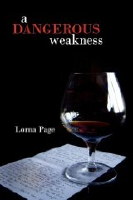
It's been the feel-good story in the news during the past few days: 93-year-old Lorna Page was living in a retirement home small apartment until she secured a large advance for her thriller, A Dangerous Weakness. Amazingly, it was her first book! The money has allowed her to buy a five-bedroom house, and she's invited some of her friends from the living in a retirement home to come live with her.

But Ray Girvan of Apothecary's Drawer Weblog asks a good question. Where did this huge advance come from, given that AuthorHouse is a self-publishing firm? They don't pay huge advances. Instead, authors pay them to get published.

The Making Light blog reaches this conclusion: Someone is fibbing.

Correction: Ray pointed out to me that "The newspapers didn't say she *herself* moved out of a care home. They said she moved from an apartment into a larger house, and plans to use it to move her friends out of care home." So I've corrected the above text.

Actually, reading the article more carefully (and reading between the lines a bit), I'm guessing that what happened was that Lorna Page moved into the larger home using money she already had, but she's hoping she'll strike it rich from the book and that she'll be able to use the proceeds to pay off the house. The poor woman obviously has no idea how little writers make.
Categories: Literature/Language
Posted by Alex on Mon Aug 11, 2008
Comments (7)
Posted recently by Tobester in the Hoax Forum:


I couldn't resist doing some research on this. Here's what I found.

a) It's definitely an urban legend.

b) I can't find any record of it ever appearing in the New York Times.

c) The earliest mention of it I can find in print dates back to July 10, 2000, when it was discussed in the Sydney Morning Herald. Apparently, in a version circulating back then, they were identified as the source of the tale. They denied this, pointed out the tale was an urban legend, and noted that in earlier versions of the story American Airlines was referred to as the carrier.

d) Despite being an urban legend, it has occasionally been reported in papers as real news. For instance, the Belfast News Letter reported it on April 19, 2003. The Scotsman reported it on February 2, 2001. And The Gleaner reported it on March 13, 2004.
Categories: Exploration/Travel, Literature/Language, Urban Legends
Posted by Alex on Tue Jul 29, 2008
Comments (6)
Female fans of Lord Byron would often send him locks of their hair. In return he would send them a lock of his own. But a new book claims that what Byron often sent was a lock of fur from his pet newfoundland dog Boatswain. From Times Online:

John Murray VII, chairman of his family’s publishing house, which was founded in 1768 and worked with Byron, said the story had been passed down through the generations. Murray said the fans to whom Byron sent the hair would have been under the impression that it was his, “but it sometimes belonged to his beloved dog Boatswain. Byron was devoted to Boatswain and to send the women his hair was his little joke”.

Apparently many of these locks of Byron's hair still survive, but it doesn't sound as if anyone has tested them to determine what species they come from. (via Legends & Rumors)
Categories: Literature/Language, Sex/Romance
Posted by Alex on Sun Jun 22, 2008
Comments (5)
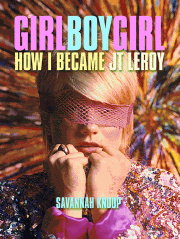
Laura Albert created the character of JT Leroy, and wrote the books that appeared in his name. However, Albert's sister-in-law, Savannah Knoop, played the part of JT whenever he was required to make an appearance in real life. Now Knoop has authored an account of what it was like to play JT. It'll be published in October by Seven Stories Press. From the publisher's website:

In January 2006, The New York Times unmasked Savannah Knoop as the face of the mysterious author JT LeRoy. A media frenzy ensued as JT’s fans, mentors, and readers came to terms with the fact that the gay-male- ex-truck-stop-prostitute-turned-literary-wunderkind was really a girl from San Francisco, whose middle-aged sister-in-law, Laura Albert, wrote the books. Girl Boy Girl is the story of how Savannah led this bizarre double life for six years, trading a precarious existence as a college dropout for a life in which she was embraced by celebrities and artists... and traveled the world.

Laura Albert isn't happy about the forthcoming book. She's quoted by the New York Post as saying, "I am not in any way connected with this book and it disgusts me. Just because you play a writer doesn't mean you are a writer. I think Savannah is being motivated by money and attention. Now that she's had to go back to being a civilian, this is her way of getting back to it. It's sad and it's sleazy. She's really stepping on my feelings."

Gawker comments: "just because you slap the label 'non-fiction' on your otherwise mediocre 'art' to build buzz doesn't mean you have to refrain from calling anyone else a sell-out."

I'm wondering when the movie about the JT Leroy saga will appear. IMBD.com lists it as being in development, but has no info about its release date. (Thanks, Joe)

Previous posts about JT Leroy:
Oct 2005: Is JT LeRoy a Hoax?
Jan 2006: JT LeRoy: An Update
Feb 2006: Knoop Confesses JT Leroy Was a Hoax
Mar 2006: JT Leroy: The Movie
Sep 2006: Writer Behind J.T. LeRoy Comes Clean
Jun 2007: JT LeRoy, phantom author (Updated!)
Categories: Literature/Language
Posted by Alex on Mon Jun 02, 2008
Comments (6)
There are many theories about the true identity of Shakespeare. A new one (at least, new to me) is that Shakespeare was actually a Jewish woman named Amelia Bassano Lanier. This argument is made by John Hudson, author of a forthcoming biography of Bassano (who was the first woman to publish a book of poetry in England). Haaretz reports:

The theory rests largely on the circumstances of Bassano's life, which Hudson contends match, much better than William Shakespeare's did, the content of "Shakespeare's" work. But Hudson has also identified technical similarities between the language used in Bassano's known poetry and that used in "Shakespeare's" verse. And he has located clues in the text - recently noted Jewish allegories and the statistically significant appearance of Amelia Bassano Lanier's various names in the plays - that he says point to her as the only convincing candidate for the author of Shakespeare's work.

Hudson offers a summary of his theory in an article he posted on Jewcy.com, "Shakespeare's Plays Were Written By A Jewish Woman." Hudson also maintains a site, darkladyplayers.com, where he goes into more details about his theory.

If it turned out that Shakespeare really was a woman, that would top Pope Joan for Most Outrageous Case of Gender Concealment Ever. However, I'm sure that mainstream Shakespeare historians are going to resist accepting Hudson's theory.
Categories: Literature/Language
Posted by Alex on Wed May 28, 2008
Comments (11)
Heraldnet.com (the newspaper of Snohomish County) recently ran this story:

Mom appalled at racy books in store for teens at Alderwood mall
By Scott Pesznecker
Herald Writer
LYNNWOOD -- Marci Milfs went to Urban Outfitters to find clothes for her teenage son. She was surprised to find sexually charged books that she believes have no place in a clothing store for teens and young adults. On one end of the spectrum was "Porn for Women," a photo book showing men doing housework. On the other was "Pornogami: A Guide to the Ancient Art of Paper-Folding for Adults," a guide for making anatomically correct artwork. "When I saw it, I was shocked," Milfs said... Milfs was so appalled that she is preparing to file a complaint with the city of Lynnwood, and has already aired her frustrations to State Rep. Norma Smith, R-Clinton, and organizations including Morality in Media, Concerned Women of America and the American Family Association.

When I saw this story I assumed either it had to be a joke, or the reporter had fallen for a prank. Kind of like when reporters are tricked into quoting "Haywood Jablome" as a source.

A "MILF" (for anyone unfamiliar with the term) is popular internet slang for any attractive older woman. By internet standards, that means any woman over the age of 25. It stands for "Mom I'd like to f***".

So a story about "Marci Milfs" being appalled by racy books has to be a joke. Right? Apparently not. It's just another example of an unfortunate last name. Marci Milfs seems to be a real person.
Categories: Literature/Language, Sex/Romance
Posted by Alex on Tue May 06, 2008
Comments (10)
Many British papers have reported the humorous story of a young woman who called the operator trying to order a cab, but instead had a cabinet delivered to her home. Her problem was too much Cockney, and too little Queen's English. From Ananova:

the Londoner, 19, wanted a taxi to take her to Bristol airport, and first used the Cockney rhyming slang "Joe Baxi". When the operator told her she couldn't find anyone by that name, the teen replied: "It ain't a person, it's a cab, innit." The operator then found the nearest cabinet shop, Displaysense, and put the girl through. She then spoke to a bemused saleswoman and eventually demanded: "Look love, how hard is it? All I want is your cheapest cab, innit. I need it for 10am. How much is it?" The sales adviser said it would be £180 and the girl gave her address and paid with a credit card. The next morning, an office cabinet was delivered to her South London home.

Two things make me suspicious of the story. 1) It sounds a lot like the classic "lost in translation" urban legend. 2) It originated from a Displaysense press release, which means that it's probably the invention of a press agent.
Categories: Literature/Language, Urban Legends
Posted by Alex on Tue Apr 15, 2008
Comments (14)
The novel Charm has already sold more than 100,000 copies. It debuted at No. 13 on the New York Times best-seller list. However, its author, Kendall Hart, isn't real. Hart is a character on the ABC soap opera "All My Children." As this NY Times article puts it: "It has Kendall’s name on the cover but the name of the actual writer is being kept secret."

This is why writers get depressed. They work hard to produce good books, which end up in remainder bins. Meanwhile, people flock in droves to buy a book just because it has the name of a soap opera character slapped on the front cover.

These kind of books spun-off from TV shows seem to be increasingly common. I think Lost has produced a few of them, which have also sold well.
Categories: Literature/Language
Posted by Alex on Mon Apr 07, 2008
Comments (8)
Margaret Soltan makes an interesting observation on her blog about all the recent memoir hoaxers. She writes:

Consider these author photos of a few (there are many more) recent memoir hoaxers. 
What do they have in common?  They all say:  Look directly at my big sad eyes.  I have deeply suffered.
Perhaps we can ask legitimate writers to assume a different pose.  That way we can identify the hoaxers.


The authors shown are, from left to right, Margaret Seltzer, Norma Khouri, Helen Demidenko, and James Frey.
Categories: Literature/Language
Posted by Alex on Wed Mar 05, 2008
Comments (4)
One week after Misha Defonseca confessed that she didn't really grow up with wolves, as she claimed in her memoir of her childhood in war-torn Europe, another literary hoax has surfaced.

Love and Consequences, by Margaret B. Jones, purports to be a non-fiction memoir of the author's life "as a half-white, half-Native American girl growing up in South-Central Los Angeles as a foster child among gang-bangers, running drugs for the Bloods."

In reality, as the NY Times reports: "Margaret B. Jones is a pseudonym for Margaret Seltzer, who is all white and grew up in the well-to-do Sherman Oaks section of Los Angeles, in the San Fernando Valley, with her biological family. She graduated from the Campbell Hall School, a private Episcopal day school in the North Hollywood neighborhood. She has never lived with a foster family, nor did she run drugs for any gang members. Nor did she graduate from the University of Oregon, as she had claimed."

Seltzer offers the usual excuse: It's true in a vague, metaphorical sense. The things she describes really do happen. They just didn't happen to her.

Seltzer was outed by her older sister who saw an article about her in last week's NY Times. I predict there's going to be some awkward Thanksgiving dinners for that family in the future.

Seltzer's publisher has cancelled her book tour and is recalling all copies of the book.
Categories: Identity/Imposters, Literature/Language
Posted by Alex on Tue Mar 04, 2008
Comments (9)
The big news in the world of hoaxes, revealed last week (and already posted in the forum), was the revelation that Misha Defonseca's best-selling, non-fiction memoir of growing up in war-torn Europe turns out to be fiction. (Thanks to everyone who forwarded me links to the news.)

Defonseca's memoir, Misha: A Memoir of the Holocaust Years (also titled Surviving with Wolves), describes how when she was a young child her Jewish parents were seized by the Nazis, forcing her to wander Europe alone until she was adopted by a pack of wolves in the Warsaw ghetto.

The reality is that she wasn't actually adopted by wolves. Nor did she wander Europe. She was raised by her grandparents. Nor is she Jewish.

Defonseca offered the well-worn excuse of literary hoaxers: she considers the tale to be true in a metaphorical sense. She says, "This story is mine. It is not actually reality, but my reality, my way of surviving." This excuse is used so often that bookstores might soon have to start separating books into a third category: fiction, non-fiction, and non-fiction in a metaphorical sense.

Defonseca's hoax was exposed by Sharon Sergeant, a genealogical researcher, who became suspicious and did some research into Defonseca's past.

This is not the first hoax holocaust memoir. In fact, the holocaust is quite a popular subject for literary hoaxers. Jerzy Kosinski claimed his 1965 work The Painted Bird was a non-fiction memoir of his childhood experiences during the Holocaust. It's now considered to be fiction.

And in 1993 Helen Demidenko won the Vogel Literary Award for her book The Hand That Signed the Paper, which described, so she said, her family's experiences in the Ukraine during the Holocaust. Later she admitted that her family never lived in the Ukraine. They were from Britain. And her real name was Darville, not Demidenko.
Categories: History, Literature/Language
Posted by Alex on Mon Mar 03, 2008
Comments (19)
Page 3 of 12 pages  < 1 2 3 4 5 >  Last ›