 |  |
| HOME | FORUM | REGISTER | LOGIN | HOAXIPEDIA | TOP 100 APRIL FOOLS | COLLEGE PRANKS | ABOUT THE CURATOR |
| A HISTORY OF HOAXES | HOAX WEBSITES | HOAX PHOTO TESTS | GULLIBILITY TESTS | TALL-TALE CREATURES | CONTACT |
About the Hoax Photo Database
The Hoax Photo Database catalogs examples of photo fakery, from the beginnings of photography up to the present. Included in the database are photos that are "real," but which have been suspected of being fake, as well as images whose veracity remains undetermined. The photos are displayed in chronological order (or reverse-chronological). They're categorized by theme, technique of fakery (if known), and time period. See below for the full list of categories.
Other viewing options
View database as Thumbnail Gallery, reverse-chronological or chronological.
The Hoax Photo Database catalogs examples of photo fakery, from the beginnings of photography up to the present. Included in the database are photos that are "real," but which have been suspected of being fake, as well as images whose veracity remains undetermined. The photos are displayed in chronological order (or reverse-chronological). They're categorized by theme, technique of fakery (if known), and time period. See below for the full list of categories.
Other viewing options
View database as Thumbnail Gallery, reverse-chronological or chronological.
Techniques of Fakery
Numerous techniques of image manipulation are now available to photographers. Instead of trying to list every one, we've narrowed them down to a few broad categories.
Time Periods
Numerous techniques of image manipulation are now available to photographers. Instead of trying to list every one, we've narrowed them down to a few broad categories.
- Added Details
- Deleted Details
- False Caption
- Manipulating Existing Details
- Staged Scene
- Trick Angle
Time Periods
This page has been viewed 0 times.

The Master Race
Status: False caption
Date: May 8, 1943
Date: May 8, 1943
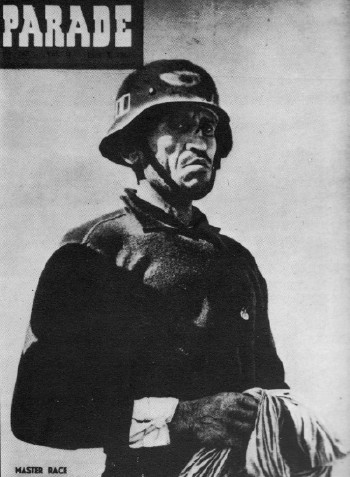
The May 8, 1943 cover of the British illustrated magazine Parade showed an unkempt, dour-looking German soldier on its cover with the satirical caption, "Master Race." This cover ran as the German army was beginning a general retreat.
However, the man in the picture was not actually a German soldier. The photo was a piece of government propaganda created by the British Army Film and Photographic Unit. Derek Knight, who was at the time an employee of this unit, later admitted that the man was "the ugliest Arab they could find in the streets of Cairo and whom they dressed up in a sort of uniform."
However, the man in the picture was not actually a German soldier. The photo was a piece of government propaganda created by the British Army Film and Photographic Unit. Derek Knight, who was at the time an employee of this unit, later admitted that the man was "the ugliest Arab they could find in the streets of Cairo and whom they dressed up in a sort of uniform."
References:
• Parade. (May 8, 1943.) 143(11).
• Jaupert, Alain. (1989). Making People Disappear: An Amazing Chronicle of Photographic Deception. Pergamon-Brassey's: 177.
• Parade. (May 8, 1943.) 143(11).
• Jaupert, Alain. (1989). Making People Disappear: An Amazing Chronicle of Photographic Deception. Pergamon-Brassey's: 177.
Technique: Staged Scene. Time Period: 1940-1959.
Themes: Magazine Covers, Military, War, Photojournalism, Striking a Pose,.
Themes: Magazine Covers, Military, War, Photojournalism, Striking a Pose,.
Raising the Flag on Iwo Jima
 |
 |
Status: Real
Date: Feb 23, 1945
Date: Feb 23, 1945
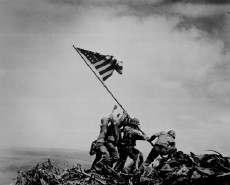
The image (top) of Marines raising an American flag on the peak of Iwo Jima's Mt. Suribachi was taken by AP photographer Joe Rosenthal on February 23, 1945. It is one of the most reproduced images in history, having appeared on a postage stamp (which for years was the biggest selling stamp in U.S. post office history) and also served as the model for the Marine Corps War Memorial in Arlington, Virginia. However, within days after Rosenthal took it, rumors began to spread that he had staged it. Although these rumors have been repeatedly discredited, they continue to be repeated to the present day.
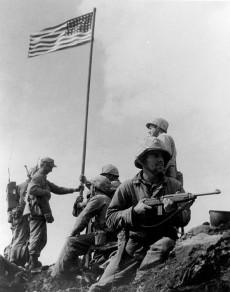
The rumors can be traced back to the fact -- which Rosenthal never tried to hide -- that he photographed the second flag-raising on Mt. Suribachi, not the first. The marines had raised a flag earlier in the day, under heavy fire. Marine Photographer Louis Lowery managed to get a shot of this event (bottom). But the commanders later decided this first flag should be replaced by a larger one. Rosenthal only arrived at the peak in time to photograph this second flag raising, but he always insisted that he never directed or posed the soldiers in this shot any way.
The rumors can be traced back to the fact -- which Rosenthal never tried to hide -- that he photographed the second flag-raising on Mt. Suribachi, not the first. The marines had raised a flag earlier in the day, under heavy fire. Marine Photographer Louis Lowery managed to get a shot of this event (bottom). But the commanders later decided this first flag should be replaced by a larger one. Rosenthal only arrived at the peak in time to photograph this second flag raising, but he always insisted that he never directed or posed the soldiers in this shot any way.
References:
Fifty Years Later, Iwo Jima Photographer Fights His Own Battle. Associated Press.
Story of a picture. (Mar 26, 1945). Time.
Raising the Flag on Iwo Jima. Wikipedia.
Fifty Years Later, Iwo Jima Photographer Fights His Own Battle. Associated Press.
Story of a picture. (Mar 26, 1945). Time.
Raising the Flag on Iwo Jima. Wikipedia.
Time Period: .
Themes: Real But Suspected Of Being Fake,.
Themes: Real But Suspected Of Being Fake,.
Red Army Flag Over Reichstag
 |
 |
 |
Status: Fake (staged & doctored)
Date: May 2, 1945
Date: May 2, 1945
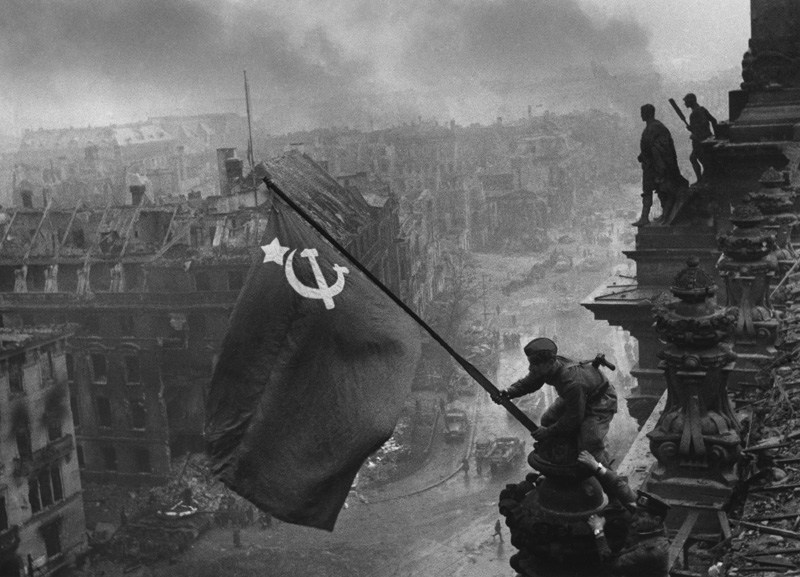
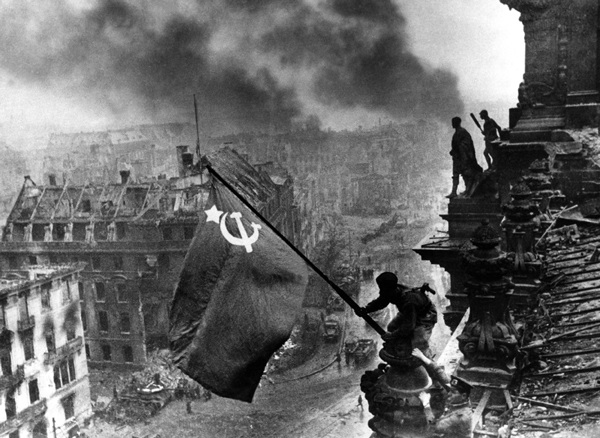
Next to Joe Rosenthal's photo of raising the flag on Iwo Jima, Yevgeny Khaldei's photo of Soviet soldiers raising a flag on top of the Reichstag building in Berlin is perhaps the most famous photo of World War II.
But unlike the Iwo Jima photo, Khaldei's Reichstag photo was both staged and doctored.
Khaldei's photo was directly inspired by Rosenthal's Iwo Jima photo. Noting the publicity the Iwo Jima photo had received, Soviet officials (perhaps Stalin himself) ordered Khaldei to fly from Moscow to Berlin in order to take a similar photo that would symbolize the Soviet victory over Germany. Khaldei took a Soviet flag with him in his luggage.
When Khaldei arrived in Berlin, he considered a number of settings for the photo, including the Brandenburg Gate and Tempelhof Airport, but he decided on the Reichstag, even though Soviet soldiers had already succeeded in raising a flag over this building a few days earlier. Khaldei recruited a small group of soldiers and, on May 2, 1945, proceeded to recreate the scene (top).
Back in Moscow, Soviet censors who examined the photo noticed that one of the soldiers had a wristwatch on each arm, indicating he had been looting. They asked Khaldei to remove one of the watches. Khaldei not only did so, but also darkened the smoke in the background. The resulting picture (middle) was published soon after in the magazine Ogonjok. It became the version that achieved worldwide fame.
Subsequently, the photo continued to be altered. The flag was made to appear to be billowing more dramatically in the wind. The photo was also colorized.
Throughout his life, Khaldei remained unrepentant about having manipulated this, his most famous photo. Whenever asked about it, he responded, "It is a good photograph and historically significant. Next question please."
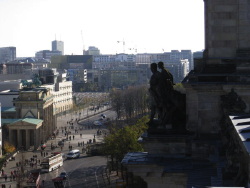
The bottom photo, taken in 2008, shows what approximately the same view from the top of the Reichstag looks like now.
But unlike the Iwo Jima photo, Khaldei's Reichstag photo was both staged and doctored.
Khaldei's photo was directly inspired by Rosenthal's Iwo Jima photo. Noting the publicity the Iwo Jima photo had received, Soviet officials (perhaps Stalin himself) ordered Khaldei to fly from Moscow to Berlin in order to take a similar photo that would symbolize the Soviet victory over Germany. Khaldei took a Soviet flag with him in his luggage.
When Khaldei arrived in Berlin, he considered a number of settings for the photo, including the Brandenburg Gate and Tempelhof Airport, but he decided on the Reichstag, even though Soviet soldiers had already succeeded in raising a flag over this building a few days earlier. Khaldei recruited a small group of soldiers and, on May 2, 1945, proceeded to recreate the scene (top).
Back in Moscow, Soviet censors who examined the photo noticed that one of the soldiers had a wristwatch on each arm, indicating he had been looting. They asked Khaldei to remove one of the watches. Khaldei not only did so, but also darkened the smoke in the background. The resulting picture (middle) was published soon after in the magazine Ogonjok. It became the version that achieved worldwide fame.
Subsequently, the photo continued to be altered. The flag was made to appear to be billowing more dramatically in the wind. The photo was also colorized.
Throughout his life, Khaldei remained unrepentant about having manipulated this, his most famous photo. Whenever asked about it, he responded, "It is a good photograph and historically significant. Next question please."
The bottom photo, taken in 2008, shows what approximately the same view from the top of the Reichstag looks like now.
References:
• Iconic Red Army Reichstag Photo Faked. (May 2008). Spiegel.
•Ernst Volland. (May 2008). Das Banner des Sieges.
•Witness to History: The Photographs of Yevgeny Khaldei. (1997). Aperture.
• Iconic Red Army Reichstag Photo Faked. (May 2008). Spiegel.
•Ernst Volland. (May 2008). Das Banner des Sieges.
•Witness to History: The Photographs of Yevgeny Khaldei. (1997). Aperture.
Technique: Deleted Details, Drawn-in Details, Staged Scene. Time Period: 1940-1959.
Themes: Military, War, Photojournalism,.
Themes: Military, War, Photojournalism,.
The Tydings Affair
 |
 |
 |
Status: Fake (composite)
Date: 1950
Date: 1950
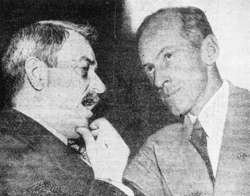
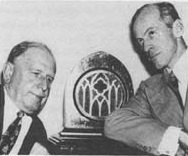
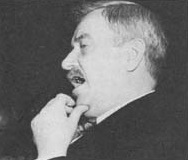
In 1950 Millard Tydings (a U.S. Senator from Maryland) challenged Senator Joseph McCarthy by calling his allegation that hundreds of communists were working in the State Department "a fraud, a hoax, and a deceit." As payback, McCarthy's staff faked a picture (top) of Tydings (on the right) apparently chatting with Earl Browder (on the left), head of the American Communist Party. The truth was that Tydings had never even met Browder before July, 1950. The image was a composite of a 1938 photo of Tydings listening to the radio (middle) and a 1940 photo of Browder delivering a speech (bottom).
The photo was widely distributed shortly before the 1950 senate race in which Tydings ran against John Butler. It appeared in a pamphlet titled "From the Record" printed by a group calling itself Young Democrats for Butler. A caption acknowledged the photo was a composite. Nevertheless, the image is believed to have contributed to Tydings' subsequent defeat in the election.
The photo was widely distributed shortly before the 1950 senate race in which Tydings ran against John Butler. It appeared in a pamphlet titled "From the Record" printed by a group calling itself Young Democrats for Butler. A caption acknowledged the photo was a composite. Nevertheless, the image is believed to have contributed to Tydings' subsequent defeat in the election.
References:
• "Faked photo shows Tydings and Browder." (Nov 8, 1950). The Washington Post.
• Millard Tydings, Wikipedia.
• "Faked photo shows Tydings and Browder." (Nov 8, 1950). The Washington Post.
• Millard Tydings, Wikipedia.
The Kiss at City Hall
Status: Staged
Date: April 1, 1950
Date: April 1, 1950

A couple kisses passionately on a city street, oblivious to the pedestrians passing by. The image is one of the most famous in the world, reproduced on countless posters and coffee mugs. It was taken on April 1, 1950 by Robert Doisneau, on assignment for Life magazine, outside Paris' City Hall.
The photo was published in the June 12, 1950, issue of Life, but only became famous when it was republished in poster form during the 1980s. Doisneau steadfastly maintained it was a spontaneous scene, fortuitously caught on film. This greatly added to its appeal.
But in 1993 Doisneau was sued by Jean-Louis and Denise Lavergne, who claimed to be the couple in the scene. They demanded compensation for having their picture taken without their knowledge. In court Doisneau confessed he had actually used professional models to stage the scene, but the models were not the Lavergnes. They were Francoise Bornet (nee Delbart) and Jacques Carteaud. The Lavergne's case was dismissed.
Francoise Bornet subsequently sued Doisneau, seeking a percentage of the photograph's sales, but her case was also dismissed due to the fact she had waited forty-three years to make a claim. Jacques Carteaud, who had since become a winegrower, did not join her case. He noted that Doisneau had paid them 500 francs at the time, which he regarded as fair payment for their work.
References:
• Whose Kiss Is This? 43 Years Later, 3 Sue. (April 29, 1993). The New York Times.
• Paris, Mon Amour. (July 2005). Smithsonian Magazine.
• Whose Kiss Is This? 43 Years Later, 3 Sue. (April 29, 1993). The New York Times.
• Paris, Mon Amour. (July 2005). Smithsonian Magazine.
Venusian Scoutcraft
 |
 |
Status: Staged with a model
Date: December 13, 1952
Date: December 13, 1952
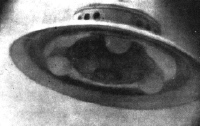
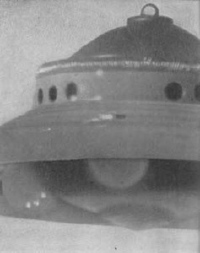
UFOlogist George Adamski claimed that a Venusian scoutcraft visited him twice in 1952. On the second visit it flew low enough over his Southern California home in Palomar Gardens to allow to photograph it. He said he took these pictures with a Kodak Brownie box camera attached to a six-inch telescope. Adamski went on to write a number of books describing his contacts with aliens and attracted a large following. In 1959 he was even granted an audience with Queen Juliana of the Netherlands.
But not even diehard UFO believers take Adamski's UFOtographs seriously anymore. Skeptics note that the UFO looks like the top of a soft-drink cooler or a lamp shade, and there appear to be ping pong balls glued to the bottom of it. Jerrold Baker, one of Adamski's colleagues, later claimed to have seen the model used to fake these Venusian Scoutcraft photos.
But not even diehard UFO believers take Adamski's UFOtographs seriously anymore. Skeptics note that the UFO looks like the top of a soft-drink cooler or a lamp shade, and there appear to be ping pong balls glued to the bottom of it. Jerrold Baker, one of Adamski's colleagues, later claimed to have seen the model used to fake these Venusian Scoutcraft photos.
References:
Adamski Scout Ships, Forgetomori.
Stein, G. & MacNee, M.J. (1995). Hoaxes! Dupes, Dodges & Other Dastardly Deceptions. Visible Ink Press: 22-24.
Adamski Scout Ships, Forgetomori.
Stein, G. & MacNee, M.J. (1995). Hoaxes! Dupes, Dodges & Other Dastardly Deceptions. Visible Ink Press: 22-24.
Dr. Schweitzer in the Congo
Status: Composite image
Date: 1954
Date: 1954
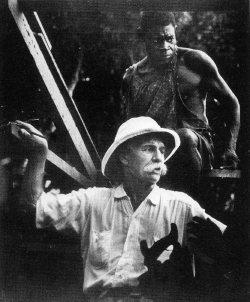
W. Eugene Smith took this photo of Dr. Albert Schweitzer helping to build a hospital in the Congo. It served as the lead photograph in a photo essay about Schweitzer, titled A Man of Mercy, commissioned by Life magazine.
More than thirty years after its publication, researcher Glenn Willumson, who was writing Smith's biography, discovered something new about the photo. As he was sorting through Smith's negatives, he realized that the famous photo was actually two photos composited together. Schweitzer and the man behind him are from one negative. The hand and the saw in the foreground come from a second negative. Smith apparently inserted the hand and saw into the image to conceal an area of fogging on the main negative.
Smith's editors at Life never knew it was a composite image, because Smith had prepared the image in his own photo lab. This was a privilege he was allowed because of his status within the photographic community, and because he had complained about the poor quality of Life's photo labs. The alteration violated Life's editorial policy, but there has been little public criticism of Smith for having made the change.
More than thirty years after its publication, researcher Glenn Willumson, who was writing Smith's biography, discovered something new about the photo. As he was sorting through Smith's negatives, he realized that the famous photo was actually two photos composited together. Schweitzer and the man behind him are from one negative. The hand and the saw in the foreground come from a second negative. Smith apparently inserted the hand and saw into the image to conceal an area of fogging on the main negative.
Smith's editors at Life never knew it was a composite image, because Smith had prepared the image in his own photo lab. This was a privilege he was allowed because of his status within the photographic community, and because he had complained about the poor quality of Life's photo labs. The alteration violated Life's editorial policy, but there has been little public criticism of Smith for having made the change.
References:
• Willumson, Glenn. (1992). W. Eugene Smith and the Photographic Essay. Cambridge University Press: 211-13.
• Willumson, Glenn. (1992). W. Eugene Smith and the Photographic Essay. Cambridge University Press: 211-13.
The Peppered Moth
 |
 |
Status: Staged using dead moths
Date: 1955
Date: 1955
At the beginning of the nineteenth century, most moths in the UK were an off-white color, highly adapted to hiding from predators, such as birds, by resting on pale, mottled grey tree trunks. But the Industrial Revolution polluted the environment, raining soot down on the countryside. As a result, white moths became highly visible on the now blackened tree trunks. Black moths, on the other hand, such as the peppered moth (which had previously been quite rare), suddenly had a competitive advantage. They were well camouflaged on black tree trunks, and their numbers grew exponentially. By the early twentieth century, they were the dominant moth form in polluted areas of the UK.
The above story is considered the classic example of "evolution in action." It shows how an environmental change can give one form of a species a selective advantage, leading to its dominance. Its validity rests upon experiments conducted by researcher H.B.D. Kettlewell during the 1950s, which demonstrated that white moths do have an advantage over dark moths on pale trees, and a disadvantage on dark trees, and vice versa.
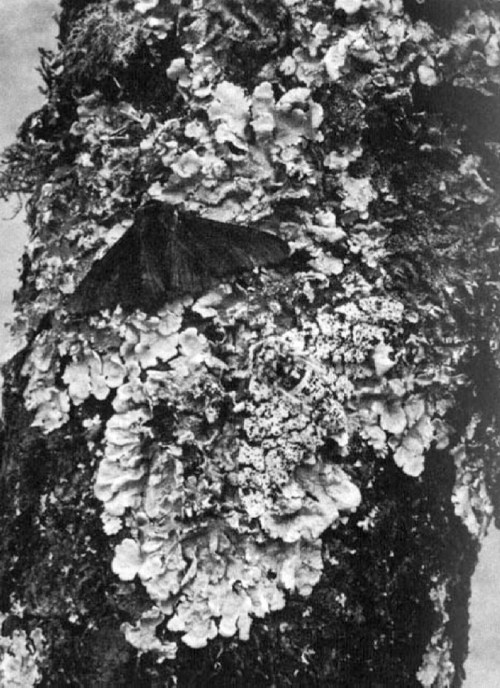
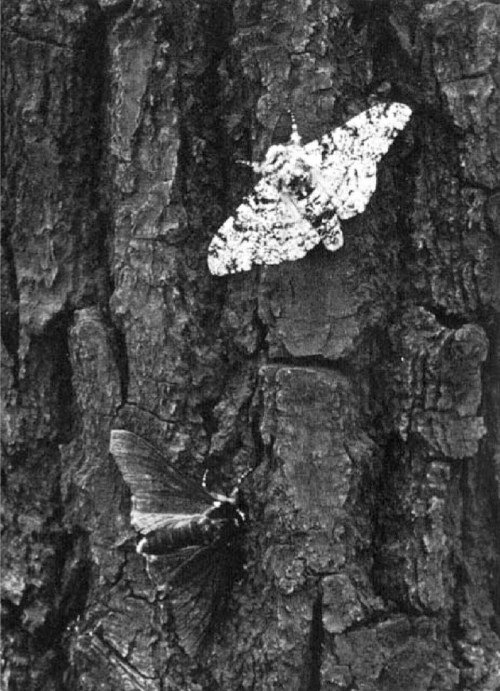
But what made the story of the peppered moth particularly popular was the visual evidence. In 1955 Kettlewell published a pair of photos showing the relative camouflage of the black and white moth forms in the two settings. In the top photo it is easy to see the black moth on the pale, lichen-covered bark and to imagine how a bird could pick it off, but the white moth is almost invisible. In the bottom photo, by contrast, the black moth is almost invisible while resting on a soot-blackened tree.
Since the mid-1960s most Biology textbooks have included the story of the peppered moth, accompanied by Kettlewell's two photos (or ones very similar to them). The ubiquity of the images made it that much more shocking when the public learned the photos were staged. Finding black and white moths posed beside each other in a natural setting would have been almost impossible, so to create the photos Kettlewell pinned dead moths to tree trunks. Moth experts knew the photos were staged because live moths would not have had extended wings. But no textbook ever disclosed this detail to readers.
The staging of the photos was first raised as an issue by intelligent-design advocate Jonathan Wells in his 2000 work Icons of Evolution. But the controversy reached a more mainstream audience in 2002 when science writer Judith Hopper discussed it in her popular account of the science of the peppered moth, Of Moths and Men.
The staging was an issue, critics argued, because it over-simplified the peppered moth story and made it seem that the camouflage of the moths was a self-evident advantage. However, it wasn't clear that moths rested on tree trunks during the day, as the pictures implied. Some evidence suggested they preferred to remain higher in the tree canopy and beneath branches where their coloration would have been less of an advantage. Also, it wasn't clear that birds were the main predator of moths. Bats also ate moths, and since bats use echolocation to navigate, the coloration of the moths would not have made a difference. Critics also questioned the methodology of Kettlewell's experiments.
Scientists still vigorously defend the peppered moth story as an example of evolution in action. They also defend the use of the staged photos in textbooks, arguing that, although they're not entirely accurate, they offer an invaluable way of presenting the concept of natural selection to students in an easy-to-comprehend form.
Nevertheless, the pair of images has become one of the most famous and controversial examples of staged photographs in all of science.
The above story is considered the classic example of "evolution in action." It shows how an environmental change can give one form of a species a selective advantage, leading to its dominance. Its validity rests upon experiments conducted by researcher H.B.D. Kettlewell during the 1950s, which demonstrated that white moths do have an advantage over dark moths on pale trees, and a disadvantage on dark trees, and vice versa.
But what made the story of the peppered moth particularly popular was the visual evidence. In 1955 Kettlewell published a pair of photos showing the relative camouflage of the black and white moth forms in the two settings. In the top photo it is easy to see the black moth on the pale, lichen-covered bark and to imagine how a bird could pick it off, but the white moth is almost invisible. In the bottom photo, by contrast, the black moth is almost invisible while resting on a soot-blackened tree.
Since the mid-1960s most Biology textbooks have included the story of the peppered moth, accompanied by Kettlewell's two photos (or ones very similar to them). The ubiquity of the images made it that much more shocking when the public learned the photos were staged. Finding black and white moths posed beside each other in a natural setting would have been almost impossible, so to create the photos Kettlewell pinned dead moths to tree trunks. Moth experts knew the photos were staged because live moths would not have had extended wings. But no textbook ever disclosed this detail to readers.
The staging of the photos was first raised as an issue by intelligent-design advocate Jonathan Wells in his 2000 work Icons of Evolution. But the controversy reached a more mainstream audience in 2002 when science writer Judith Hopper discussed it in her popular account of the science of the peppered moth, Of Moths and Men.
The staging was an issue, critics argued, because it over-simplified the peppered moth story and made it seem that the camouflage of the moths was a self-evident advantage. However, it wasn't clear that moths rested on tree trunks during the day, as the pictures implied. Some evidence suggested they preferred to remain higher in the tree canopy and beneath branches where their coloration would have been less of an advantage. Also, it wasn't clear that birds were the main predator of moths. Bats also ate moths, and since bats use echolocation to navigate, the coloration of the moths would not have made a difference. Critics also questioned the methodology of Kettlewell's experiments.
Scientists still vigorously defend the peppered moth story as an example of evolution in action. They also defend the use of the staged photos in textbooks, arguing that, although they're not entirely accurate, they offer an invaluable way of presenting the concept of natural selection to students in an easy-to-comprehend form.
Nevertheless, the pair of images has become one of the most famous and controversial examples of staged photographs in all of science.
References:
• Kettlewell, HBD. (1955). "How Industrialization Can Alter Species." Discovery. 16(12): 507-511.
• Hooper, J. (2002). Of Moths and Men: The untold story of science and the peppered moth. WW Norton & Company.
• Rudge, DW. (2003). "The Role of Photographs and Films in Kettlewell's Popularizations of the Phenomenon of Industrial Melanism." Science & Education. 12: 261-287.
• Kettlewell, HBD. (1955). "How Industrialization Can Alter Species." Discovery. 16(12): 507-511.
• Hooper, J. (2002). Of Moths and Men: The untold story of science and the peppered moth. WW Norton & Company.
• Rudge, DW. (2003). "The Role of Photographs and Films in Kettlewell's Popularizations of the Phenomenon of Industrial Melanism." Science & Education. 12: 261-287.
The Vanishing Belly Button, 1964
Status: Deleted detail
Date: February 1964
Date: February 1964
In February 1964, Scandinavian Airlines placed an advertisement in newspapers and magazines throughout America. It featured a bikini-clad blonde model posing on a rock above the caption "What to show your wife in Scandinavia."
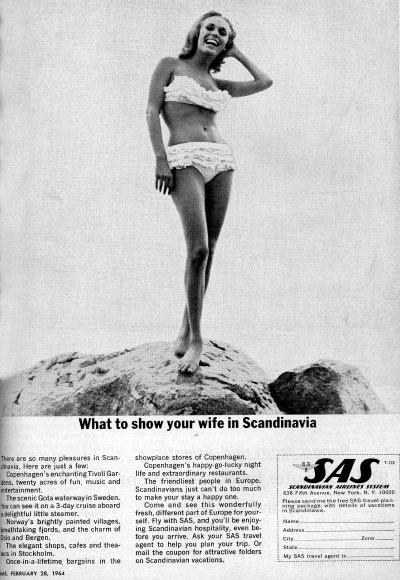
The image above shows the ad as it appeared in most publications. However, the version (below) that appeared in the Los Angeles Times had one detail altered. The editors of the Times, in order to "conform to regulations," removed her belly button.
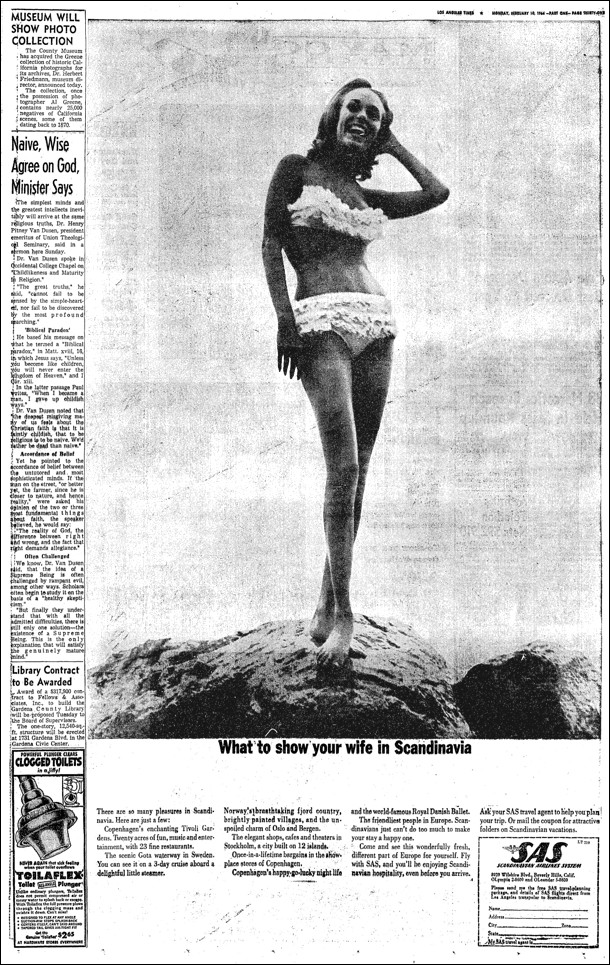
Los Angeles Times, February 10, 1964
The image above shows the ad as it appeared in most publications. However, the version (below) that appeared in the Los Angeles Times had one detail altered. The editors of the Times, in order to "conform to regulations," removed her belly button.
Los Angeles Times, February 10, 1964
Technique: Deleted Details. Time Period: 1960-1979.
Themes: Advertising, Strange Body Parts, Striking a Pose,.
Themes: Advertising, Strange Body Parts, Striking a Pose,.
Thoughtography
 |
 |
Status: Falsely claimed to be paranormal in origin
Date: Gained notoriety in 1967
Date: Gained notoriety in 1967
Ted Serios was a Chicago-area bellhop who claimed he could transfer his thoughts directly from his mind onto film. He called the process "thoughtography." The images were usually blurry but had recognizable objects in them such as buildings, cars, or even aircraft.
The process of creating a thoughtograph was highly theatrical. Serios would usually get extremely drunk. He would shout and wail and screw up his features. Then he would hold a small tube, which he called a "gismo," up against the lens of a polariod camera. When he felt a thoughtograph was ready to emerge, he would shout at the person behind the camera to trigger the shutter. He never handled the camera himself.
Serios attracted the attention of a psychiatrist named Jule Eisenbud who studied him extensively and became a firm believer in his powers. In 1967 Eisenbud published a book called The World of Ted Serios which brought Serios to a much wider audience. A 1967 article in Life also gained him enormous notoriety.
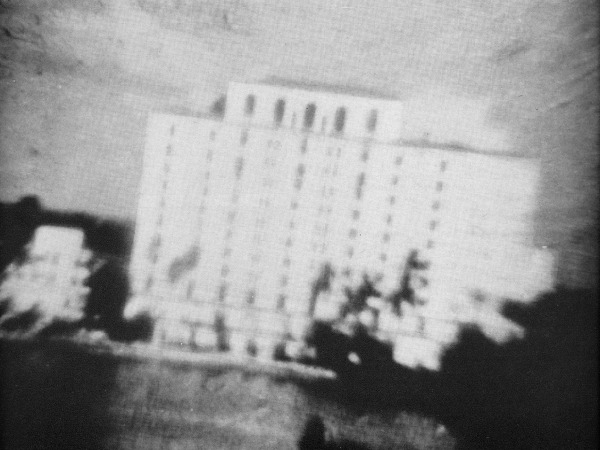
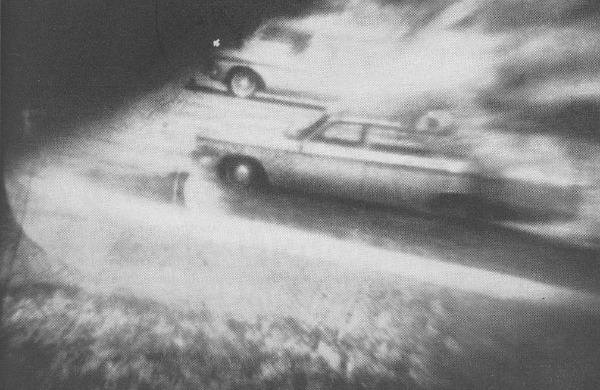
Serios produced hundreds of thoughtographs. Two of them are reproduced here. The top photo, taken in 1965, shows an unidentified building. The bottom one, taken in 1965, shows an unidentified street scene. Eisenbud claimed that Serios' eye could be seen mysteriously superimposed on top of the car.
Skeptics have dismissed Serios' powers as a fraud. James Randi argued that Serios could have created the thoughtographs by concealing a small lens with a photographic transparency attached to it inside the gismo. Randi was able to produce similar photographs in this way.
After 1967, Serios drifted into obscurity. He reportedly died in 2006.
The process of creating a thoughtograph was highly theatrical. Serios would usually get extremely drunk. He would shout and wail and screw up his features. Then he would hold a small tube, which he called a "gismo," up against the lens of a polariod camera. When he felt a thoughtograph was ready to emerge, he would shout at the person behind the camera to trigger the shutter. He never handled the camera himself.
Serios attracted the attention of a psychiatrist named Jule Eisenbud who studied him extensively and became a firm believer in his powers. In 1967 Eisenbud published a book called The World of Ted Serios which brought Serios to a much wider audience. A 1967 article in Life also gained him enormous notoriety.
Serios produced hundreds of thoughtographs. Two of them are reproduced here. The top photo, taken in 1965, shows an unidentified building. The bottom one, taken in 1965, shows an unidentified street scene. Eisenbud claimed that Serios' eye could be seen mysteriously superimposed on top of the car.
Skeptics have dismissed Serios' powers as a fraud. James Randi argued that Serios could have created the thoughtographs by concealing a small lens with a photographic transparency attached to it inside the gismo. Randi was able to produce similar photographs in this way.
After 1967, Serios drifted into obscurity. He reportedly died in 2006.
References:
• Eisenbud, J. (1967). The World of Ted Serios. William Morrow. New York.
• Randi, J. (1980). Flim-Flam! The Truth About Unicorns, Parapsychology and Other Delusions. Lippincott & Crowell: 222-228.
• Reynolds, C. and Eisendrath, D.B. (Oct 1967). "An amazing weekend with the amazing Ted Serios." Popular Photography: 81-87, 131-141, 158.
• Root, N.. (2002). Mind power or hoax?
• Welch, P. (Sep 22, 1967). "A Man Who Thinks Pictures." Life 63(12): 112-114.
• Eisenbud, J. (1967). The World of Ted Serios. William Morrow. New York.
• Randi, J. (1980). Flim-Flam! The Truth About Unicorns, Parapsychology and Other Delusions. Lippincott & Crowell: 222-228.
• Reynolds, C. and Eisendrath, D.B. (Oct 1967). "An amazing weekend with the amazing Ted Serios." Popular Photography: 81-87, 131-141, 158.
• Root, N.. (2002). Mind power or hoax?
• Welch, P. (Sep 22, 1967). "A Man Who Thinks Pictures." Life 63(12): 112-114.