The Museum of Hoaxes
HOME   |   ABOUT   |   FORUM   |   CONTACT   |   PINTEREST   |   FACEBOOK   |   TWITTER   |   RSS
The Archive of Hoaxes Before 1700 1700-1799 1800-1868 1869-1913 1914-1949 1950-1976 1977-1989 1990-1999 21st Century
Sub-Archives   Hoax Photo Archive April Fools Archive Tall-Tale Creature Archive
Pranks
The Cerne Abbas Giant (circa mid-1640s)
The Cerne Abbas Giant is a chalk figure of an enormous naked man wielding a club carved into the side of a hill in Dorchester, England. The giant is one of a number of presumably ancient hill figures that dot the English countryside, such as the Long Man of Wilmington and the White Horse of Uffington. But the Cerne Abbas giant is uniquely distinctive because of the enormous erect phallus that he sports. The giant occupies a treasured place in British culture. He's widely believed to have been carved thousands of years ago. Folklore suggests he's an ancient fertility god, possessing the power to make childless women pregnant. Postcards of him are the only images of a naked man accepted by the British post office. But in recent years historians have suggested that the Giant may date only to the seventeenth-century, since the first written reference to it only dates to 1694. Furthermore, its creation may have been a prank. More→
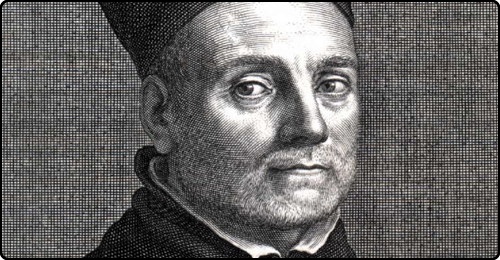
Athanasius Kircher (1602-1680) was a Jesuit Scholar and professor of Mathematics at the Roman College in Italy. He was one of the central figures of Baroque scientific culture, and probably the greatest expert on ancient and universal languages, archaeology, astronomy, magnetism, and Chinese and Egyptian culture in Europe at that time. However, he was also reported to be the target of a number of pranks and hoaxes. More→
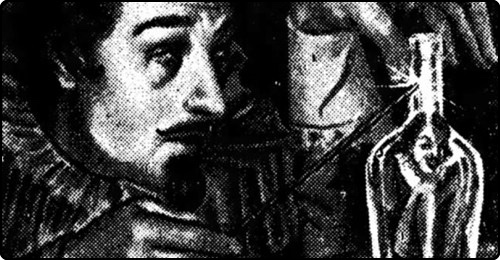
In 1749 several British noblemen, the Duke of Portland and the Earl of Chesterfield, were discussing the gullibility of the public. They decided to test its credulity by designing a test. The Duke bet the Earl that if he advertised that an impossible feat would be performed — a man jumping into a quart bottle — they would still "find fools enough in London to fill a playhouse and pay handsomely for the privilege of being there." The Earl accepted the bet. More→
The Berners Street Hoax (November 26, 1810)
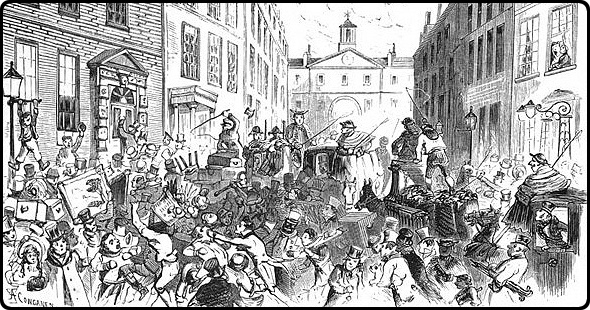
In 1810 London was the largest, wealthiest city in the world, linked by trade with every continent, and fed by the manufacturing might of northern British cities such as Liverpool and Manchester. Almost anything could be obtained in its shops, and on Monday, November 26 of that year, all of this mercantile abundance focused for one day upon a single residential address: 54 Berners Street, the home of Mrs. Tottenham (in some sources spelled Tottingham). More→
Categories: Pranks, 1800-1868
The Dreadnought Hoax (February 7, 1910)

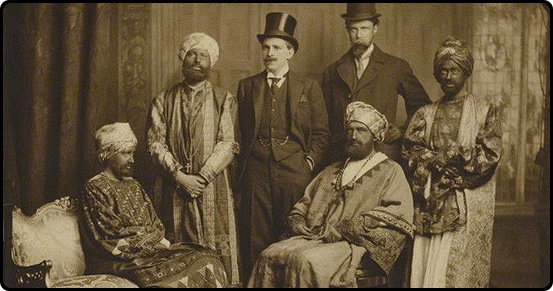
"The Emperor of Abyssinia" and his suite
From left to right: Virginia Stephen (Virginia Woolf), Duncan Grant, Horace Cole, Anthony Buxton (seated), Adrian Stephen, Guy Ridley.
On February 7, 1910 the Prince of Abyssinia and his entourage were received with full ceremonial pomp on the deck of the H.M.S. Dreadnought, the British Navy's most powerful battleship. Although the Commander-in-Chief of the Dreadnought had only received a last-minute warning of the Prince's arrival, he had the sailors standing at attention when the Prince arrived. The Abyssinian party acknowledged the greeting with bows as they shuffled onto the ship, dressed in their long, flowing robes, and for the next forty minutes the Commander gave them a guided tour of the vessel. The Abyssinians paused at each new marvel while murmuring the appreciative phrase "Bunga, Bunga!" in their native tongue. Finally the royal visitors departed as "God Save the King!" played in the background. More→
rodman law
F. Rodman Law
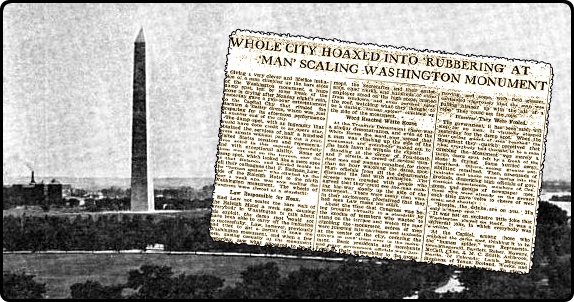
Frederick Rodman Law (1885-1919) was a well-known daredevil active in the early 20th century. His stunts included parachuting from the top of the Statue of Liberty and jumping off the Brooklyn Bridge. In late April 1912, he requested permission to parachute from the top of the Washington Monument, but he was turned down. However, on May 7, 1912, a pedestrian standing on the corner of Fourteenth and F streets exclaimed that Law appeared to be scaling the monument without permission — and was already a third of the way up.

The pedestrian drew attention to a dark figure on the side of the monument. Soon a huge crowd, numbering in the hundreds, had gathered to watch the feat. For well over an hour people stared and squinted at the figure. Many members of Congress came out of their offices to witness the event, as did officials from the State and Treasury departments and many newspaper reporters. But when the police arrived at the base of the monument to apprehend Law when he came down, they realized that what had resembled a human figure from a distance was actually a damp spot on the side of the monument caused by the previous night's rain. The pedestrian who had originally called attention to the spot had, by that time, disappeared. More→
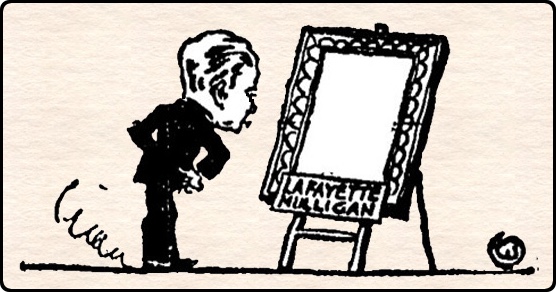
In 1924 a man calling himself Lafayette Mulligan presented the Prince of Wales with the key to the City of Boston, while the Prince was vacationing in Massachusetts. However, the Mayor of Boston had no idea who Lafayette Mulligan was. In fact, Lafayette Mulligan was not a real person at all. More→
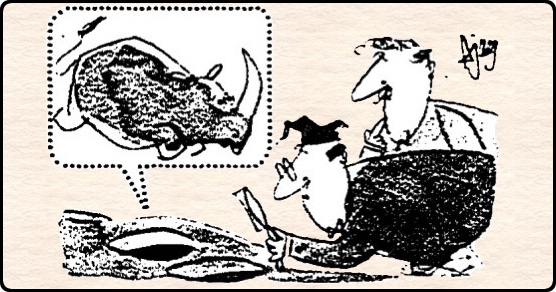
After a heavy snowfall, the footprints of a large animal were found on the campus of Cornell University, leading up to the shore of the frozen Beebe Lake. A hole in the ice indicated that the animal must have fallen in and drowned.

A zoologist examined the tracks and identified them as those of a rhinoceros. Word of the rogue rhinoceros spread around town, and since the University got its water supply from the lake, many students declared they were no longer going to drink the water. Many of those who did drink it, swore they could taste rhinoceros.

The tracks turned out to be the work of Cornell student Hugh Troy. He and a friend had borrowed a rhino-foot wastepaper basket from a professor's house. They had weighted it down with scrap metal then attached it to a clothesline. Holding the clothesline at either end, they made their way across campus, creating a trail of tracks in the snow up to the edge of the lake.

The rhinoceros footprints are one of the most famous pranks in Cornell's history. However, there is no documentation to prove that the prank happened. Therefore, some suggest it may only be a legend.
Hugh Troy (1906-1964)
By trade Hugh Troy (1906-1964) was an artist. He illustrated many children's books, including "Maude for a Day," "The Chippendale Dam," and "Five Golden Wrens." But by nature he was a practical joker, with numerous pranks to his credit. When asked once what advice he would give to aspiring practical jokers, he replied that one should never sit down and try to deliberately think up a practical joke. This was a sure way to arrive at uninspired ideas. Instead, a prankster needs to seize the moment, grabbing opportunities as they arise. More→
Hugo N. Frye (May 1930)
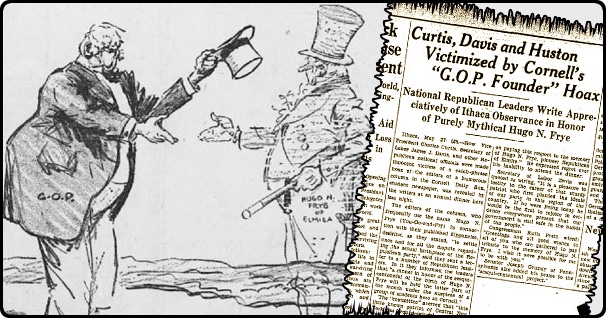
In 1930 Republican leaders throughout the United States received letters inviting them to a May 26 party at Cornell University in honor of the sesquicentennial birthday anniversary of Hugo Norris Frye, aka Hugo N. Frye. The letter explained that Hugo N. Frye had been one of the first organizers of the Republican party in New York State. None of the politicians could make it to the event, but almost all of them replied, expressing sincere admiration for Frye and their regret at not being able to attend.

Unfortunately for the Republican leaders who responded, Hugo N. Frye did not exist. He was the satirical creation of two student editors at the Cornell Sun. Hugo N. Frye was shorthand for "You go and fry!" More→
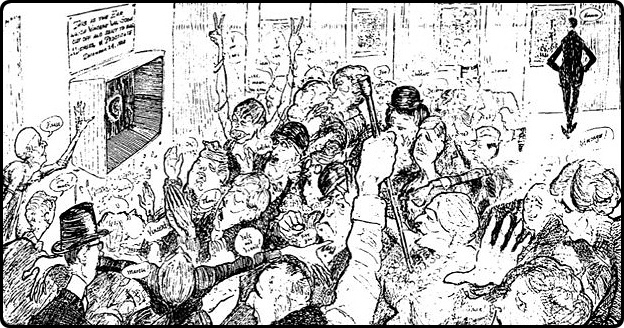
The illustrator Hugh Troy was frustrated by the crowds at New York's Van Gogh exhibit, which made it hard for art lovers such as himself to view the works. He was also convinced that most of the people were there out of lurid interest in the man who had cut off his ear, not out of a true appreciation for the art. To prove his point, he fashioned a fake ear out of a piece of dried beef and mounted it in a velvet-lined shadow box. He snuck this into the museum and stood it on a table in the Van Gogh exhibit. Beside the box he placed a sign: "This is the ear which Vincent Van Gogh cut off and sent to his mistress, a French prostitute, Dec. 24, 1888." More→
Jim Moran (1907-1999)
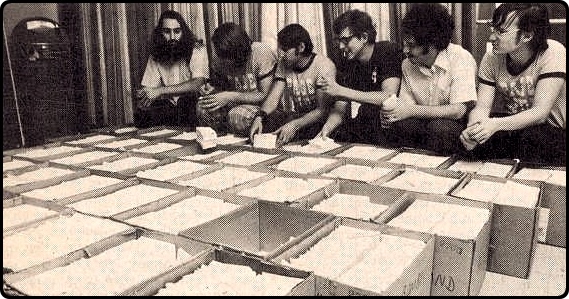
Jim Moran (1907-1999) was called, at various times, "super salesman number one," "America's No. 1 prankster," and "the last great bunco artist in the profession of publicity." He became famous during the 1930s and 40s for devising outrageous stunts on behalf of his clients. His favorite technique was to test the validity of popular sayings. For instance, he sold an icebox to an eskimo, found a needle in a haystack, and walked a bull through a china shop. More→
A Homemade UFO (July 11, 1947)
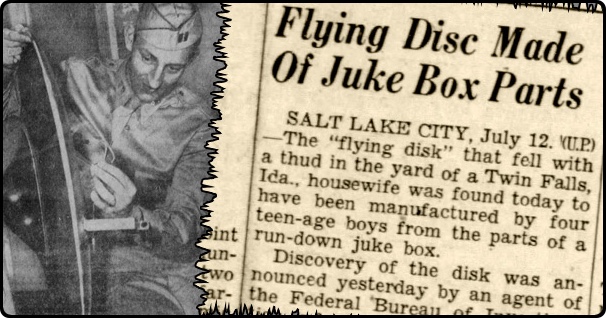
July 11, 1947: Ten days after residents of Twin Falls, Idaho reported seeing flying saucers in the sky, a woman reported finding a flying saucer embedded in the lawn of her neighbor's home. Police came out to investigate, followed by the FBI and three army officers who flew out from Fort Douglas, Utah. What they found was a small, gold-and-silver-colored saucer about the size of a bicycle wheel. It had gouged long strips in the lawn as it landed. The army officers removed the saucer and took it to Salt Lake City for closer investigation. But the police, working on a tip, then identified the saucer as the creation of four teenage boys, who had spent several days building it out of radio tubes, wires, an old phonograph, and discarded electrical parts. The boys claimed it was "all a joke." Because of their age, no charges were brought against them.

Route of the 1956 Olympic torch relay, from Cairns to Melbourne.
In 1956 runners bore the Olympic flame across Australia, on a path from Cairns to Melbourne, where the summer games were to be held. But before the flame even got as far as Sydney, it had to endure a series of setbacks. Torrential rains soaked it. Burning heat almost overwhelmed the runners. The flame even went out a few times. Then in Sydney itself it encountered a situation unique in Olympic history.

Cross-country champion Harry Dillon was scheduled to bear the flame into Sydney, where he would present it to the mayor, Pat Hills. After making a short speech, Hills would pass the flame along to another runner, Bert Button.

Thirty-thousand people lined the streets of Sydney waiting for Dillon to arrive. Reporters stood ready with their cameras to record the historic occasion. Finally the runner appeared, bearing the flame aloft, and everyone began cheering. As the crowd pressed forward a police escort surrounded the runner in order to keep order.

With this escort around him, the runner made his way through the streets all the way to the Sydney Town Hall. He bounded up the steps and handed the torch to the waiting mayor who graciously accepted it and turned to begin his prepared speech.

Then someone whispered in the mayor's ear, "That's not the torch." Suddenly the mayor realized what he was holding. Held proudly in his hand was not the majestic Olympic flame. Instead he was gripping a wooden chair leg topped by a plum pudding can inside of which a pair of kerosene-soaked underwear was burning with a greasy flame. The mayor looked around for the runner, but the man had already disappeared, melting away into the surrounding crowd. More→
In early 1958 Michigan motorists began to report sightings of a "little blue man". The glowing figure, who looked like a spaceman from a science-fiction movie, would appear out of nowhere on rural roads, and then just as suddenly disappear. When startled motorists stopped to investigate, they could find no trace of him.

As time progressed, the sightings grew more fantastic. Some said the man appeared to be ten-feet high. Others thought he was only two-feet high. One motorist claimed he "ran faster than any human."

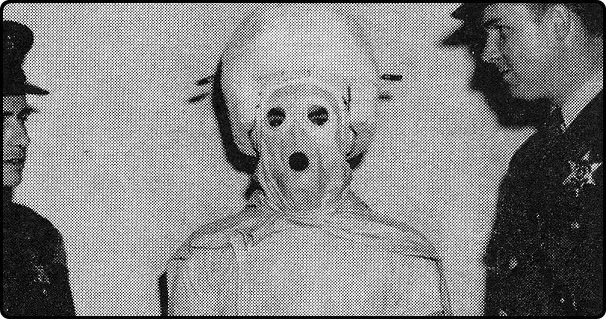
The police began to search for what, or who, was causing these sightings. Their search ended when three young men — Jerry Sprague, Don Weiss, and LeRoy Schultz — came forward and confessed. The young men explained how all the reports of flying saucers in the news had given them an idea for a prank. They created a costume consisting of long underwear, gloves, combat boots, a sheet with holes cut out for the eyes, and a football helmet to which they attached blinking lights. They then spray-painted the costume glow-in-the-dark blue (inspired by a song popular on the radio at the time, "Little Blue Man" by Betty Johnson). Sprague wore the costume, noting that "it was my underwear and I was the only one it would fit."


Sprague in costume

The trio staked out rural roads at night. Sprague would hide in a ditch, and when a motorist approached, he would leap out and run along the road to attract their attention before making a quick getaway by jumping into the trunk of the car driven by Weiss and Schultz. They did this on at least eight or ten nights, over a period of weeks.

The police let the pranksters off with a warning not to do it again.
Page 1 of 2 pages  1 2 > 
All text Copyright © 2011 by Alex Boese, except where otherwise indicated. All rights reserved.