According to German legend, the origin of April Fool's Day traces back to April 1, 1530, when a meeting of lawmakers was supposed to occur in Augsburg in order to unify the state coinage. Unscrupulous speculators, who had knowledge of the meeting's purpose beforehand, began to trade currencies in anticipation of it, hoping to profit from the change. However, because of time considerations, the meeting didn't take place, and the law wasn't enacted. So the speculators lost their money and were mocked as fools. This supposedly inspired the custom of playing pranks on April first.
There's no evidence that this meeting (or non-meeting) in Augsburg actually played any part in initiating the custom of April Fool's Day. The story is another one of the fanciful origin myths that has sprung up to account for the celebration.
More…
There are two different stories that describe the first April Fool's Day hoax by a newspaper, but both stories claim it was a German paper.
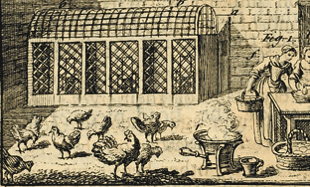
The first story claims that in 1774 a German paper claimed it was possible to breed chickens of various colors by painting the area in which the mother hen lived. The hen would supposedly pass on the color of her surroundings to her offspring.
The second story claims that in 1789 a Berlin newspaper reported that hailstone the size of pigeon eggs had fallen on the streets of Potsdam, which caused hundreds of curiosity seekers to go to the town hoping to see this unusual weather phenomenon. Of course, no hailstones were seen.
Neither story has been confirmed.
A German garden journal,
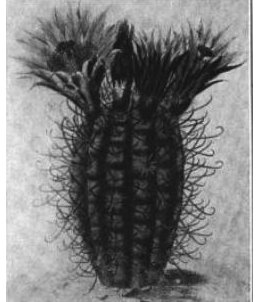
Möllers Deutsche Gärtner Zeitung (15:148), printed details about a fictitious species of cactus,
Echinocereus dahliaeflorus, in its April edition. The editor of the journal apparently forgot his own joke because he indexed the cactus name at the end of the year. [
The Cactaceae]
More…
The
German Gardener's News, edited by Herr Möller, issued an April Fool's Day edition that discussed various botanical discoveries, such as varieties of flowers that were so phosphorescent they gave sufficient light to read by. "Under proper conditions the flowers of the clematis glow like stars, while sunflowers, if correctly nurtured, make it quite possible to read a newspaper by their unaided light." A photograph showed Herr Möller reading by the light of sunflower lamps in his garden at 10 o'clock at night.
More…
Hundreds of people, mostly shop girls and women, gathered in front of the Brandenburg gate in Berlin, drawn there by an announcement placed in Berlin papers the night before stating that a motion picture camera was going to take a picture in front of the gate at noon, and that everybody who was in front of the gate would be in the picture. The announcement was a prank perpetrated by a night worker at the papers. The
Chicago Tribune foreign news service reported: "Some people stood there for hours before they realized that this was the first day of April, known in Germany as in the United States as April Fools' day." [
Chicago Daily Tribune, Apr 5, 1919.]
More…
The
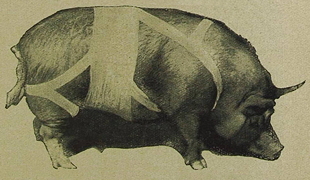
Berliner Illustrirte Zeitung reported that a German farmer had developed a method of obtaining lard from live pigs by operating on the pigs to remove the rashers, then bandaging the pigs up and letting them heal. Supposedly the operation could be repeated three times a year. The story was subsequently widely reprinted by American and British papers which didn't realize it was a joke.
More…
The
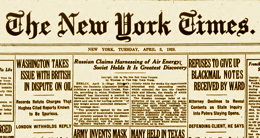
Deutsche Allgemeine Zeitung reported that a Russian scientist, Professor Figu Posakoff, had discovered a method of "harnessing the latent energy of the atmosphere," the energy displayed in thunderstorms and other atmospheric catastrophes. Harnessing this energy would allow the Soviets to hurl objects "of any weight almost unlimited distances."
The Soviets were said to have promised to use this discovery only for peaceful purposes. However the
Allgemeine Zeitung noted that it would certainly give the nation a powerful advantage in warfare.
The New York Times ran the story on its front page on April 3, having failed to realize that it was a joke.
More…
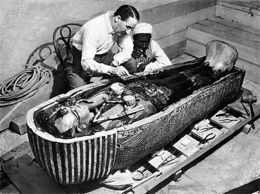
A Berlin newspaper reported that a large find of mummies and Egyptian antiquities had been unearthed during the excavation of an extension of the city's underground railway. The paper quoted an expert, Dr. Lirpa, who said that the find rivaled Tutankhamen's tomb and indicated "the presence of an Egyptian colony in Germany in prehistoric times."
(Archaeologist Howard Carter, shown in the picture, had recently — on Feb. 16, 1923 — opened the burial chamber of Tutankhamen.)
More…
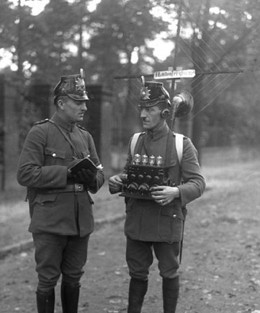
German police officers demonstrated the new radio receivers they would be equipped with, to help them stay in touch with headquarters and receive reports about riots, demonstrations, and crime. The photos appear to have been produced as part of a humorous public relations effort by the German police.
More…
The German magazine
Echo Continental ran a feature about a new "ABC mono-cycle":
The ABC-cycle was given that name by the manufacturer because it is as simple as the ABC and can be operated without prior knowledge by anyone, especially a woman. The vehicle is designed as a mono-cycle, the motor, a directionless three-stroke 2 hp. 1.5 Cylinder "Gnomissima" engine is under the seat and pleasingly warms or cools the driver. A kickstarter and convenient footrests make this motorbike particularly popular with women.
More…
The German magazine
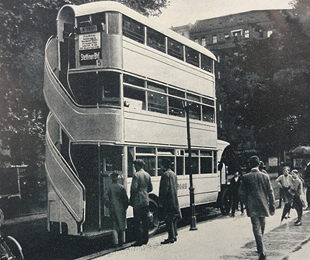
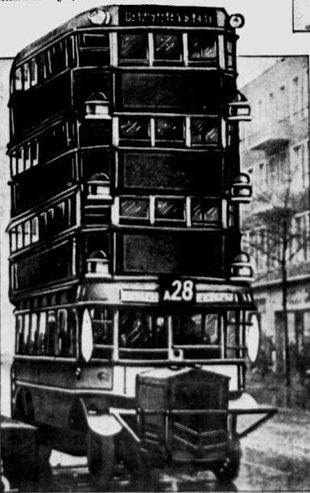
Echo Continental reported the development of a new triple-decker city bus.
Echo Continental was the trade publication of the auto and truck parts manufacturer Continental AG. The magazine focused on automobile and racing news.
More…
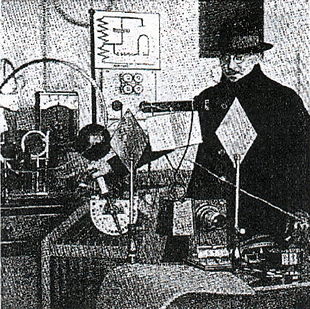
Radio Umschau, a German weekly journal about radio technology, revealed that two Polish researchers had discovered a way to overcome the force of gravity. When they aimed high-frequency FM waves at a small quartz crystal and increased the output to several kilowatts, the crystal transformed into an opaque cube and rose into the air, lifting the entire apparatus of the experiment with it. Tests showed that the cube could support a weight of 25 kilograms. The cube had not only become weightless, but had actually achieved a negative weight.
More…
The
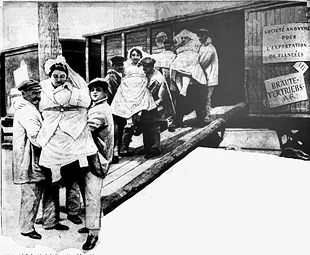
Berliner Illustrirte Zeitung ran an article about a Bride Import company created to supply wives to the men of Liechtenstein. The small principality was losing women, the magazine said, because they were all going to neighboring Switzerland and Austria to find work. As a result, the gender ratio of the country was becoming seriously unbalanced — to such an extent that the government had decided to import brides to prevent depopulation. Suitable women were found in cities and towns throughout Europe and were then transported to Liechtenstein in freight cars, where they were sold in marriage markets. When news of this article reached Liechtenstein it provoked popular outrage, most of all because the photos accompanying the article showed large-sized women as the brides-to-be. This was felt to be insulting to the beauty of the women of Liechtenstein. News of this "international row" was picked up by the press and reported worldwide.
More…
The German magazine
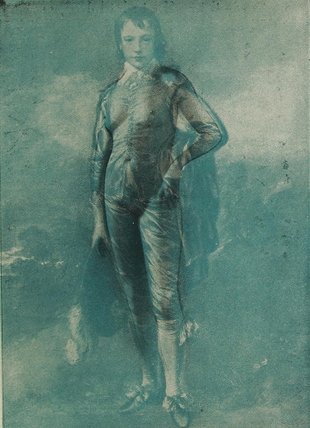
Uhu reported that x-ray analysis of Thomas Gainborough's famous work
The Blue Boy (completed circa 1770) had revealed that the boy in the picture was really a girl. The x-ray analysis, done to verify the authenticity of the painting, had shown that beneath the top layer of paint Gainsborough had drawn a picture of a nude female standing in the same position. In its next issue,
Uhu claimed that this spoof had been "widely believed in art circles."
More…
A Berlin newspaper published a photo of a four-story bus. The newspaper subsequently received several thousand letters inquiring where the bus could be seen, how many people it could hold, how fast it could travel, how much it cost to build, and how it managed to go under bridges and trolley wires without being wrecked.
More…
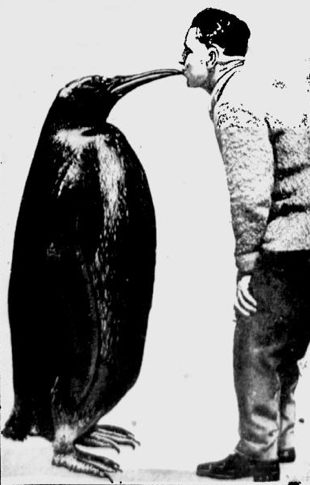
A German newspaper ran a "news photo" of a giant five-foot-high penguin kissing a man with its long beak. The accompanying story explained that the penguin had recently been brought to Berlin and was being kept in a private zoo. The story created a minor sensation. Pet store owners, animal trainers, and naturalists all received numerous calls from people wishing to see the giant penguin.
More…
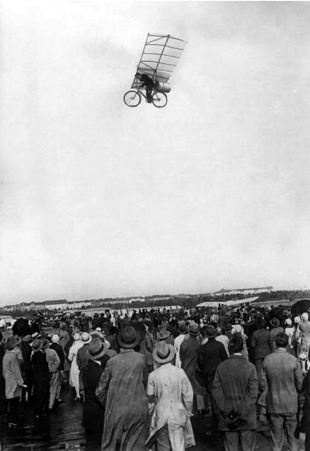
A German newspaper ran a picture of an inventor testing a flying bicycle over Tempelhof airfield in Berlin. The picture was actually a photomontage created from a shot of the inventor taken the previous month, as he prepared to test his "rocket bicycle" on a rooftop at Tempelhof.
More…
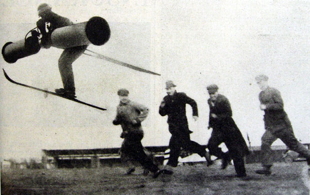
In April 1934, many American newspapers (including
The New York Times) printed a photo of a man flying through the air by means of a device powered by the breath from his lungs. The man, identified as German pilot Erich Kocher, was said to be blowing into a box on his chest, which activated rotors that created a powerful suction effect, lifting him aloft. Skis on his feet served as landing gear, and a tail fin allowed him to steer.
The photo was actually a joke from the April Fool's Day edition of the
Berliner Illustrirte Zeitung.
More…
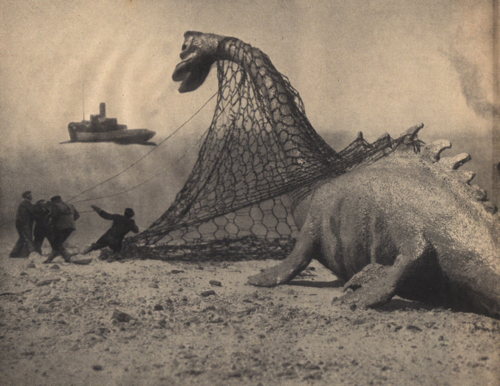
The
Berliner Illustrirte Zeitung ran a photo-feature reporting the capture of the Loch Ness Monster. Hunters, it was said, had been searching for the elusive sea monster for months. Finally lookouts on shore reported seeing Nessie make a rare visit to land. So fishing vessels moved in to prevent her from returning to the water. Then a steel net was thrown over her.
The capture proved surprisingly easy. She was taken alive to an aircraft hangar in Edinburgh. Tourist revenue from her display was expected to be enormously lucrative.
More…
The
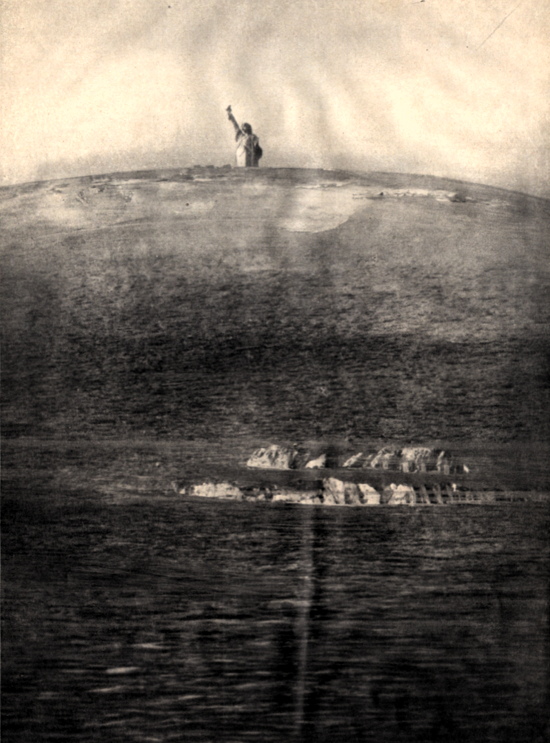
Berliner Illustrirte Zeitung ran a photo of the Statue of Liberty. The photo was supposedly taken from Europe by means of "infrared remote photography". The rocky islands visible in the foreground were England and Ireland.
More…
The
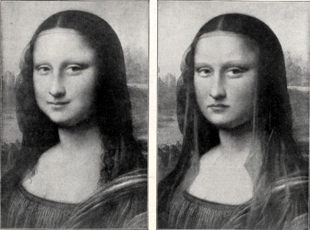
Berliner Illustrirte Zeitung reported the discovery that Leonardo da Vinci had originally painted the Mona Lisa frowning, not smiling. As a result, the Louvre had restored the painting to its original condition. But because the Mona Lisa's unhappy scowl seemed to rob the painting of much of its charm, the museum's directors were considering changing the frown back into a smile.
More…
The
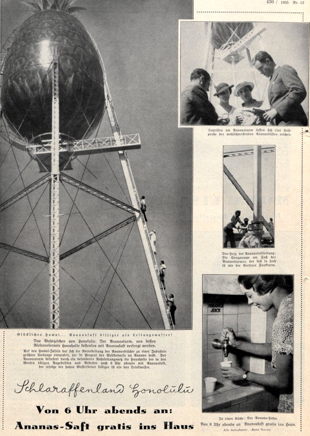
Berliner Illustrirte Zeitung reported that Honolulu's famous pineapple-shaped water tower, which stood over the cannery of the Dole Food Co., was actually filled with pineapple juice, not water. The juice was supplied free of charge through a "special pipe network" to the homes of employees of the pineapple company, after six o'clock in the evening.
More…
The
Berliner Illustrirte Zeitung reported that a "cloud cinema" had debuted in Berlin. Five massive lenses projected a moving image onto a cloudy sky. The picture, visible throughout much of the city, measured 1000x750 meters, "four times as long and three times as high as the new zeppelin is long."
The image was, at present, slightly blurry, but improvements were promised in the future. And on days without cloud cover, it was planned to create artificial clouds via fog machines attached to balloons.
In its subsequent issue, the magazine admitted, "All the angels would watch and be stirred out of their peace if the cloud cinema of our April edition were true."
More…
Life magazine published a selection "strange photographs" which they identified as being typical of the kind that appeared in German newspapers and magazines on April 1. "Every April Fool's Day, the German press goes on a spree of printing photographic hoaxes, sprinkling fake pictures in with real ones, leaving readers to guess which is which."
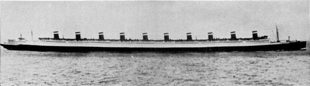
Included among the "strange photographs" was the "ten-stack super liner" shown above:
"Its launching was announced for April 1. The photographer christened the ship President Roosevelt, declared that among its many superlative features was an auto track on which car-crazy Americans could race just to keep their hands in." [
Life - Apr 4, 1938]
More…
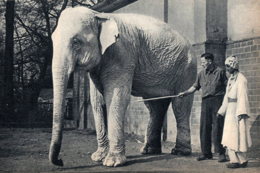
In the days leading up to April 1st, notices appeared in Frankfurt papers informing the public that a legendary "snow-white elephant" from Burma would, for a few days only, be on display at the zoo. It was en route to the Copenhagen Zoo, which was to be its permanent home, accompanied by its Burmese handlers, who were dressed in their traditional robes and head coverings.
On April 1st, over 1000 Frankfurters turned out to see the white elephant, paying a mark each. And they did see a white elephant, but it was a regular female Indian elephant that had been painted white. However, the majority of the audience didn't realize this. They learned the trick later by reading about it in the papers.
More…
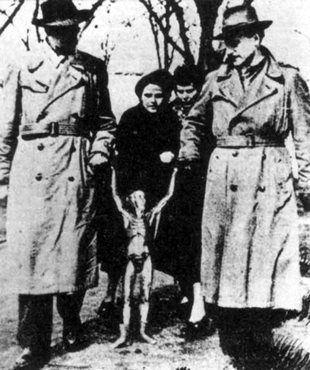
The
Cologne Neue Illustrierte published a picture of "a tiny, aluminum-covered man" who had supposedly been rescued from a saucer that had crash landed after being shot by American anti-aircraft guns. The planet this being came from was unknown.
More…
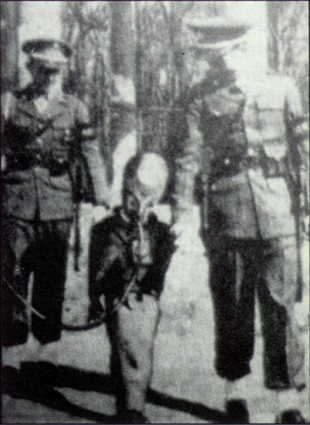
The
Wiesbadener Tagblatt published a photo of a "Martian in the USA," showing American soldiers accompanying a one-legged creature with "a large head and a very small body."
More…
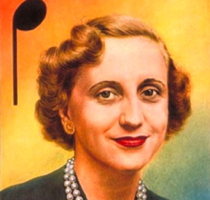
A West German newspaper reported that Margaret Truman, daughter of President Harry Truman, was planning to make a concert tour of West Germany "to inspire German approval of rearmament."
Margaret Truman had launched a singing career in 1947, though her performances often received negative reviews. Music critic Paul Hume wrote in 1950 that she was "extremely attractive on the stage... [but] cannot sing very well. She is flat a good deal of the time. And still cannot sing with anything approaching professional finish."
More…
When the Berlin Wall was erected in 1961, it ran along
Bernauer Strasse, and consequently the East German border guards bricked up the doors and windows of the houses in this street facing the border. But many people tried to escape by removing the bricks from windows and jumping down into the West.
On 1 April 1962, West German police saw a light flashing from a partly bricked-up second floor window on Bernauer Strasse, and they believed it to be someone signalling their intent to escape. So they enlisted the help of firemen and rushed to the house to spread nets beneath the window to catch the person when they jumped. But they were met by three East German guards who stuck their heads out the window and shouted down "April Fool!"
The incident was widely reported in the western media as a grim example of "communist humor."
More…
Cologne radio station Westdeutsche Rundfunk announced that city officals had decreed that joggers could only run at a maximum speed of six miles per hour through the city's parks. Any faster, it was said, and they would inconvenience the squirrels who were in the middle of their mating season.
More…
The German newspaper
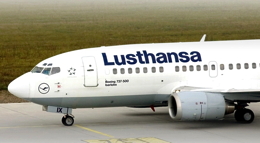
Die Welt reported that Lufthansa airline would soon be offering its flyers an in-flight matchmaking service. Passengers who opted-in to the service would be seated next to someone who had been selected as a potential romantic partner. One outraged feminist was quoted as saying that Lufthansa should rename itself "Lust-hansa."
More…
The German
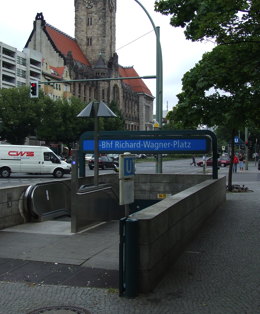
Der Tagesspiegel reported that the City of Berlin planned to raise money by auctioning the naming rights of the city's railway stations to the highest bidders. The city hoped it could raise as much as DM5m per station in this way. There was also discussion of charging the descendants of the 19th century composer Richard Wagner retrospectively for the existing station at Richard Wagner Platz.
More…
Germany's
Tageszeitung claimed that the US had decided to move its Berlin embassy because it was too close to the French embassy. (Relations between the two countries were tense at the time because of French resistance to the U.S. war in Iraq.) Also, the embassy was located on Pariser Platz (meaning Parisian Square). The newspaper noted that Washington might reconsider the move, "but only if the name of the square is changed."
More…
The German software company
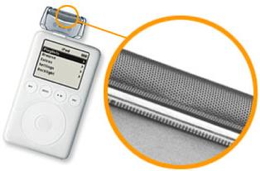
Application Systems Heidelberg debuted an iShave attachment for the iPod, allowing you to transform your iPod music player into an electric razor. The website boasted: "Now with your iPod you can not only hear good music everywhere, you can also get a smooth shave to look good."
More…